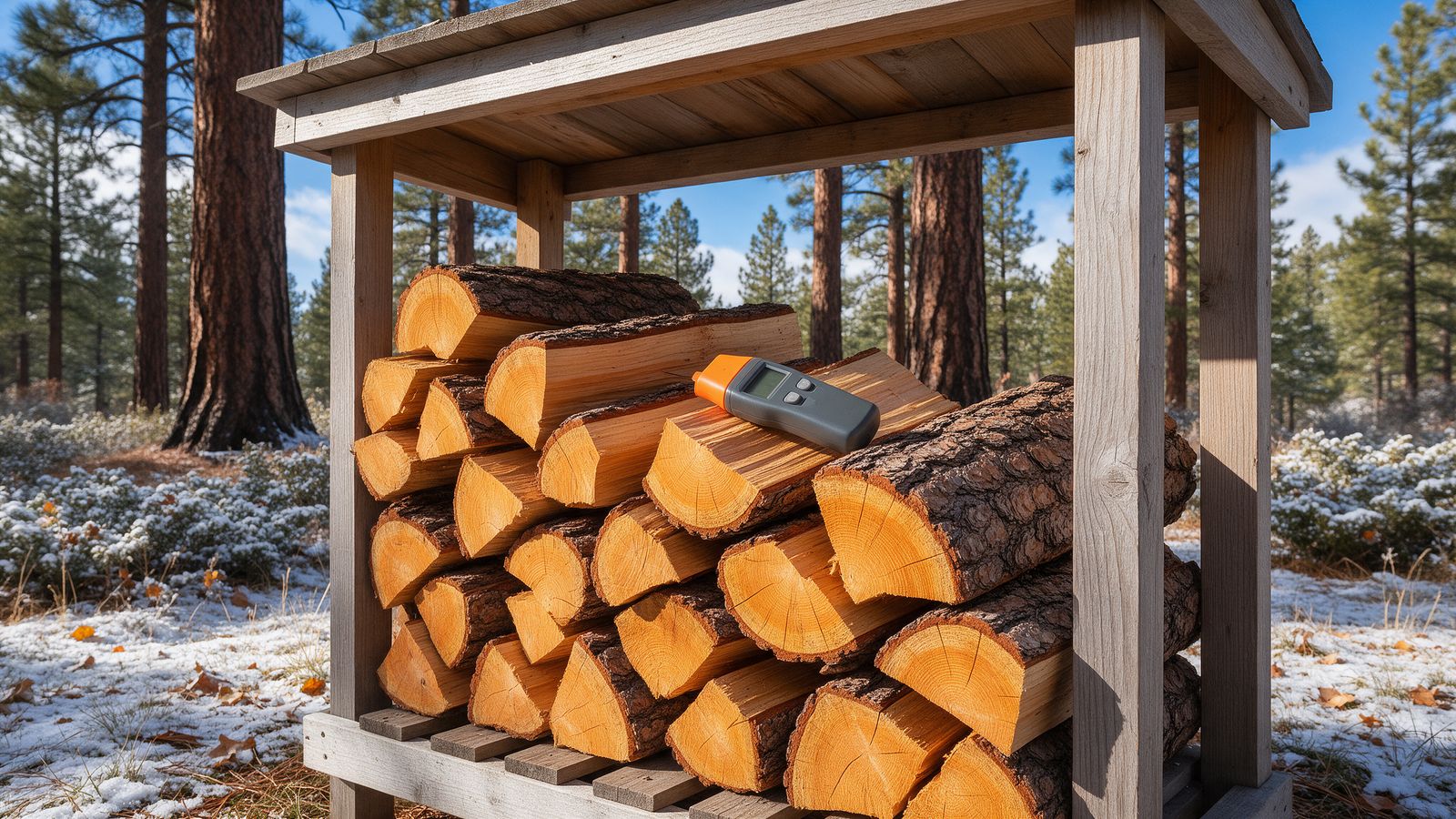
The best firewood is dry, untreated wood that your appliance permits, cut to a usable size and stored so it stays dry. Species affects heat per stack, handling and burn duration, but moisture and operation often matter more than the name on the delivery ticket. Premium hardwood that arrives wet can perform worse than properly dried local softwood.
Colorado homeowners commonly encounter pine, spruce, fir, aspen and hardwoods sold through local suppliers. Availability and price vary. Choose wood by the job it needs to do, then verify moisture, quantity and storage conditions before buying enough for a season. No species eliminates chimney inspection or makes smoky operation acceptable.
Put moisture ahead of marketing names
EPA recommends dry firewood and identifies moisture testing as a practical way to check it.[1] Wood that contains excess water spends part of its available energy evaporating that moisture. It can be harder to ignite and can contribute to smoky combustion, especially when the appliance is already operating poorly.
Test a freshly split interior face rather than the exposed end of a log. Follow the meter's instructions for pin placement, temperature and species settings. Sample several pieces from different parts of the delivery. One dry piece from the top of a stack does not establish the condition of the entire load.
EPA's homeowner guidance uses approximately 20 percent moisture or lower as a useful dry wood benchmark.[1] The appliance manual and meter instructions still matter. Record the readings when comparing suppliers, and distinguish measured moisture from a seller's claim that wood has been seasoned for a particular number of months.
Understand species without expecting miracles
Denser woods generally contain more wood mass in a given stacked volume. That can mean more heat and longer tending intervals per stack when moisture and other conditions are comparable. Lighter woods are often easier to split and can be useful for starting or shorter fires. Actual performance depends on log size and appliance operation too.
Local pine is not automatically unsuitable simply because it is a softwood. The important questions are whether it is dry, clean and approved fuel, and whether the stove is operated correctly. Avoid broad promises that a certain wood never produces creosote. Wood combustion and chimney cooling can create deposits with any species.[2]
Aspen may suit owners who value easy handling or shorter fires, while denser hardwoods may appeal to households seeking longer heat delivery. Buying the most expensive species is not necessary if its practical advantage does not match how the fireplace is used.
“Choose firewood by measured dryness and suitable use before paying extra for a species name.”
Compare common buying priorities
| Priority | What to look for | What to verify |
|---|---|---|
| Easy starting | Dry smaller splits and kindling | Approved clean wood only |
| Longer tending interval | Suitable denser fuel and larger approved splits | Appliance load limits |
| Occasional evening fire | Manageable load size and reliable dryness | Storage and leftovers |
| Seasonal wood heating | Consistent supply and covered storage | Moisture across the delivery |
| Lower delivered cost | Comparable quantity and usable condition | Split size and extra handling |
This comparison avoids a misleading universal species ranking. A low price can become poor value if half the delivery is too large for the stove or cannot dry before the heating season begins.
Ask better questions before delivery
Request the species mix, cut length, split size and quantity description in writing. Ask whether delivery and stacking are included. If the seller uses informal terms such as a truckload, clarify the actual volume. Different vehicles and loading methods can produce very different quantities under the same label.
Confirm when the wood was split and how it was stored. A standing dead tree can retain moisture, and a large unsplit log dries differently from a small split. Kiln dried describes a process, but it does not prevent a delivery from becoming wet afterward. Moisture readings are still useful.
Ask whether you can inspect a sample before accepting a full order. Photograph the delivered load and retain the invoice. A clear agreement about size and condition makes a quality concern easier to resolve than a discussion based only on the word seasoned.
Stack wood so air can reach it
Raise the stack off wet ground and allow air movement between rows. Cover the top to reduce precipitation while leaving the sides able to dry. A tarp wrapped tightly around damp wood can restrict ventilation and prolong drying. Make the stack stable enough to resist shifting or falling during handling.
Choose storage with wildfire exposure and building access in mind. Colorado State Forest Service guidance recommends keeping combustible materials appropriately separated from structures.[3] Follow the current defensible space guidance for the property rather than storing a season's fuel against the house because it is convenient.
Bring only a manageable supply indoors. Firewood can carry insects, dirt and moisture. Keep it away from the fireplace's required clearance area and do not let temporary indoor storage block exits. Convenience should support safe operation rather than create another combustible pile near the hearth.
Check stored fuel again before burning.
Buy locally and avoid moving pests
Firewood can transport insects and diseases. Colorado forestry guidance identifies transported wood as a pathway for forest pests.[4] Buying and using wood near its source can reduce that risk. Check current restrictions before bringing wood from another region or carrying leftover camping wood home.
Do not assume that a clean looking log is pest free. Retain supplier information, and follow local disposal or transport instructions if a problem is suspected. Forest health is a practical reason to choose a nearby source even when another seller advertises a more fashionable wood species.
Leave unsuitable materials out of the fire
Do not burn treated lumber, painted wood, household trash or construction scraps. EPA guidance warns against unsuitable fuels and waste burning.[1] Adhesives, coatings and treatments can release unwanted pollutants, and the material may burn in a way the appliance was not designed to handle.
Manufactured firelogs and compressed products require separate attention. Use them only if the fireplace or stove instructions permit that product and loading method. A package labeled for a fireplace is not automatically approved for a wood stove. Never use gasoline or other accelerants to start a reluctant load.
Build a fuel routine that supports clean operation
- Check a sample of the current wood supply on fresh split faces.
- Separate wood that needs more drying from wood ready for use.
- Prepare kindling and split sizes suited to the appliance manual.
- Load only the amount and arrangement the appliance permits.
- Use air controls as instructed rather than forcing prolonged smoldering.
- Reassess fuel and venting if smoke or deposits change unexpectedly.
A larger load is not always a better response to a cold room. Overfiring can damage the appliance, while starving a large load of air can worsen combustion. If the system cannot heat the intended space within its approved operation, discuss the heating plan rather than improvising a different firing method.
Keep a buying record over the season. Note the supplier, quantity, moisture readings, split size and how the load performed under normal operation. This helps distinguish a disappointing batch from a change in the appliance or chimney. Compare deliveries on equivalent usable volume rather than the number of bags or trips. If wood must finish drying, account for that delay before planning winter use. A purchase is useful only when the household has space and time to store it properly, with enough ready fuel available for the fires actually planned.
Keep readings with the invoice.
Judge results at the appliance and chimney
Watch for repeated difficulty lighting, unusually smoky operation or changes in glass deposits. Those observations can help identify a fuel problem, but they can also reflect draft, maintenance or equipment condition. Record moisture readings and operating conditions so the technician has useful information.
Keep annual inspection in the plan and arrange cleaning when needed. Dry wood reduces one contributor to poor combustion; it does not repair a damaged liner or remove an existing obstruction.[2] A new delivery should not be treated as permission to restart a fireplace with unresolved findings.
Parker Homestead Chimney's sweeping page is the appropriate place to discuss deposits and operating history. Bring the appliance model, typical use and firewood measurements to that conversation. A reliable supply of suitable dry fuel, used correctly in a sound system, is a better investment than chasing a single supposedly perfect Colorado firewood.
Sources and further reading
- US EPA Burn Wise Facts Figures and Health and Safety Tips
- US EPA Frequent Questions About Wood Burning Appliances
- Colorado State Forest Service Protect Your Home and Property from Wildfire
- Colorado State University Extension Pine Wilt Disease and Firewood Transport
EPA Burn Wise pages are retained as historical technical guidance. Verify current regulations and incentive terms with the responsible authority.
Sources accessed October 15 2026. Product manuals and applicable local requirements control specific installations.