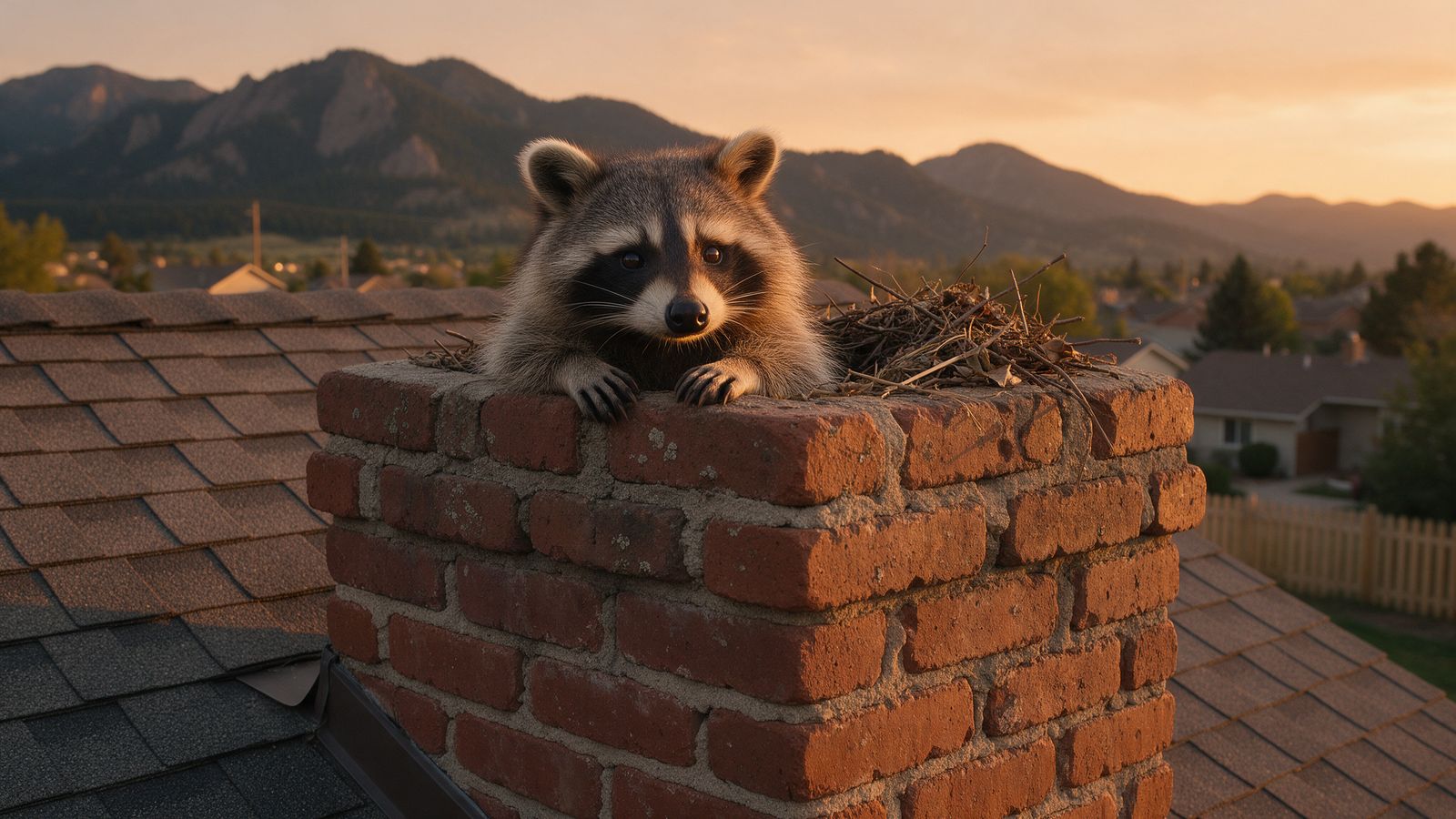
If birds or animals are inside the chimney, stop using the fireplace and arrange identification before removal or exclusion. Do not light a fire, use chemicals or install a cap over the opening to force a result. The safe approach depends on the species, whether young are present, whether a nest is active and whether an animal has entered the living space.
For a Colorado homeowner, chirping or scratching is useful evidence, but it is not a complete species identification. A blocked flue can affect combustion safety, and an occupied chimney can involve wildlife protections. The goal is to remove the immediate conflict lawfully, clean the affected area appropriately and prevent reentry after the chimney is clear.
Begin with the household and the opening
Keep people and pets away from the fireplace. If the damper can be closed without trapping an animal in the room or creating another hazard, leave it closed. Do not reach upward, remove panels or attempt to pull nesting material through the opening. An apparently empty nest may contain eggs or dependent young.
If an animal enters the home, isolate the area when safe and contact an appropriate professional. Avoid cornering or handling it. A bat requires particular caution because bites or scratches can be small or unnoticed. CDC guidance advises contacting animal control or public health professionals for capture and exposure decisions.[1]
Do not let a quiet interval persuade you that the chimney is empty. Some occupants are active only at certain times, and young can remain after an adult leaves. Confirmation should precede any permanent closure of the entry route.
Use observations without treating them as proof
Note the time of day, type of sound and whether adults can be seen entering from a safe location. Repeated daytime flights may suggest birds, while heavier movement at night may suggest a mammal. These patterns help prepare the visit, but several species can produce similar noises.
Record odor, debris and any visible damage. Keep photographs limited to safe ground level views. Do not climb a roof to photograph an animal or shine lights into an opening while leaning over it. The inspection should use appropriate access and protective equipment.
| Observation | Possible issue | First practical step |
|---|---|---|
| Repeated chirping | Active bird nest | Stop use and identify species |
| Heavy scratching | Mammal or nesting activity | Keep the opening secure from indoors |
| Fluttering inside a room | Bird or bat entry | Isolate people and pets from contact |
| Strong decay odor | Dead animal or organic material | Arrange protected investigation |
| Falling twigs or debris | Nesting or cap damage | Keep appliance off until assessed |
The table is an observation guide. It does not authorize handling, trapping or removal based solely on a sound.
Understand why active nests change the plan
The U.S. Fish and Wildlife Service explains that many native birds and their active nests are protected under federal law. Nests containing eggs or young generally cannot be destroyed without appropriate authorization.[2] Species and nest status should be resolved before work begins.
This can mean delaying exclusion until birds have left, arranging specialist advice or following a different lawful process. An urgent desire to use the fireplace does not remove those requirements. If the chimney also has a safety defect, keep it unused while the appropriate response is determined.
Ask the service provider how it identifies active nests and handles protected species. A vague promise to remove everything the same day is less useful than a clear explanation of the inspection and decision process. The homeowner should know what conditions can change the schedule.
Consider dependent young and seasonal behavior
Raccoons, squirrels and bats can use sheltered spaces in ways that involve young unable to leave on their own. Removing an adult or blocking an opening prematurely can strand them. Colorado Parks and Wildlife recommends prevention and provides species specific guidance for household conflicts.[3]
One way devices are not a universal answer. Their use depends on species, season, entry configuration and the absence of dependent young. A method that works in one situation can create welfare and odor problems in another. Ask what observation supports the selected method.
Do not relocate wildlife on your own based on advice for another state or species. Colorado requirements and practical survival concerns differ. A qualified provider should identify when wildlife authorities or a specialist need to be involved.
“Confirm the species and occupancy before removing a nest or closing the chimney top.”
Keep bat exposure decisions separate from chimney repair
If a bat was found near a sleeping person, child or someone unable to report contact reliably, seek prompt public health advice. Do not assume that the absence of an obvious bite settles the issue. A chimney service appointment cannot replace an exposure assessment.[1]
Avoid bare handed capture, and do not release a bat before animal control or health professionals advise whether testing may be relevant. Keep pets away and follow veterinary guidance if contact may have occurred. The immediate health decision and the later entry repair are different tasks.
After the exposure question is addressed, the building still needs an assessment of how entry occurred. That may involve a chimney cap, damaged screen, chase opening or a different building gap. Repair should follow the verified route rather than assume the visible fireplace was the only access point.
Remove contamination with appropriate protection
Nesting material, droppings and carcasses can involve dust and biological hazards. Avoid sweeping dry debris into the room or using a household vacuum to collect unknown material. The cleanup method should suit the species, amount of contamination and access conditions.
Ask whether the quoted work includes removal, disposal, cleaning and any separate specialist treatment. Deodorizer does not remove the source of contamination. If odor persists after removal, investigate retained material, moisture or another entry route instead of repeatedly masking the smell.
The vent path also needs evaluation. Debris can remain above bends or behind components even when the visible opening looks clear. A post removal inspection should identify whether sweeping or repairs are needed before the fireplace returns to service.
Follow the work in a sensible order
- Stop appliance use and protect people and pets from contact.
- Identify the species, nest status and possible exposure concerns.
- Choose the lawful removal or departure strategy.
- Confirm that all occupants and dependent young are clear.
- Remove accessible contamination with suitable precautions.
- Inspect the flue, damper and termination for damage or blockage.
- Install compatible exclusion components and document maintenance access.
The sequence prevents a new cap from becoming a trap. It also separates successful animal removal from approval to operate the fireplace. The chimney may still need attention after the occupant has gone.
Prevent reentry without restricting exhaust
A suitable cap or screen can reduce future entry. It must fit the chimney and preserve the required exhaust area. Improvised fine mesh can collect soot or debris, and components on a listed metal chimney must suit that system. Ask how the termination will be cleaned and inspected later.
Evaluate nearby access opportunities too. Overhanging branches, damaged chase siding and gaps elsewhere can matter, but repairs should reflect the actual species and entry route. Keep wildlife attractants such as accessible food and unsecured waste under control in accordance with CPW guidance.[3]
If the provider recommends waiting for lawful departure, request a practical interim plan. It should explain how the indoor opening remains secured, which observations require another call and when occupancy will be checked again. Waiting should have a defined purpose and follow up, not leave the homeowner guessing. Keep the appliance off throughout that period. Once departure is confirmed, coordinate cleanup and the compatible termination repair promptly so the same sheltered opening does not remain available for another occupant before the next heating season begins.
Confirm the follow up arrangement in writing.
Make the service request specific and useful
When contacting Parker Homestead Chimney through the animal removal page, describe the sounds, their timing, any animal seen and whether contact occurred. State whether the fireplace is gas or wood and whether the opening is currently secured. Share safe photographs and any prior wildlife work.
Ask for a clear explanation of removal limits, cleanup scope and the conditions for return to service. A successful visit should leave a record of what was found, how occupancy was resolved and how the chimney will resist another entry. That is more useful than a quick closure that leaves the original uncertainty inside the flue.
Sources and further reading
- US Centers for Disease Control and Prevention Preventing Rabies From Bats
- US Fish and Wildlife Service Bird Nests
- Colorado Parks and Wildlife Protect Your Home From Wildlife
Sources accessed October 15 2026. Product manuals and applicable local requirements control specific installations.