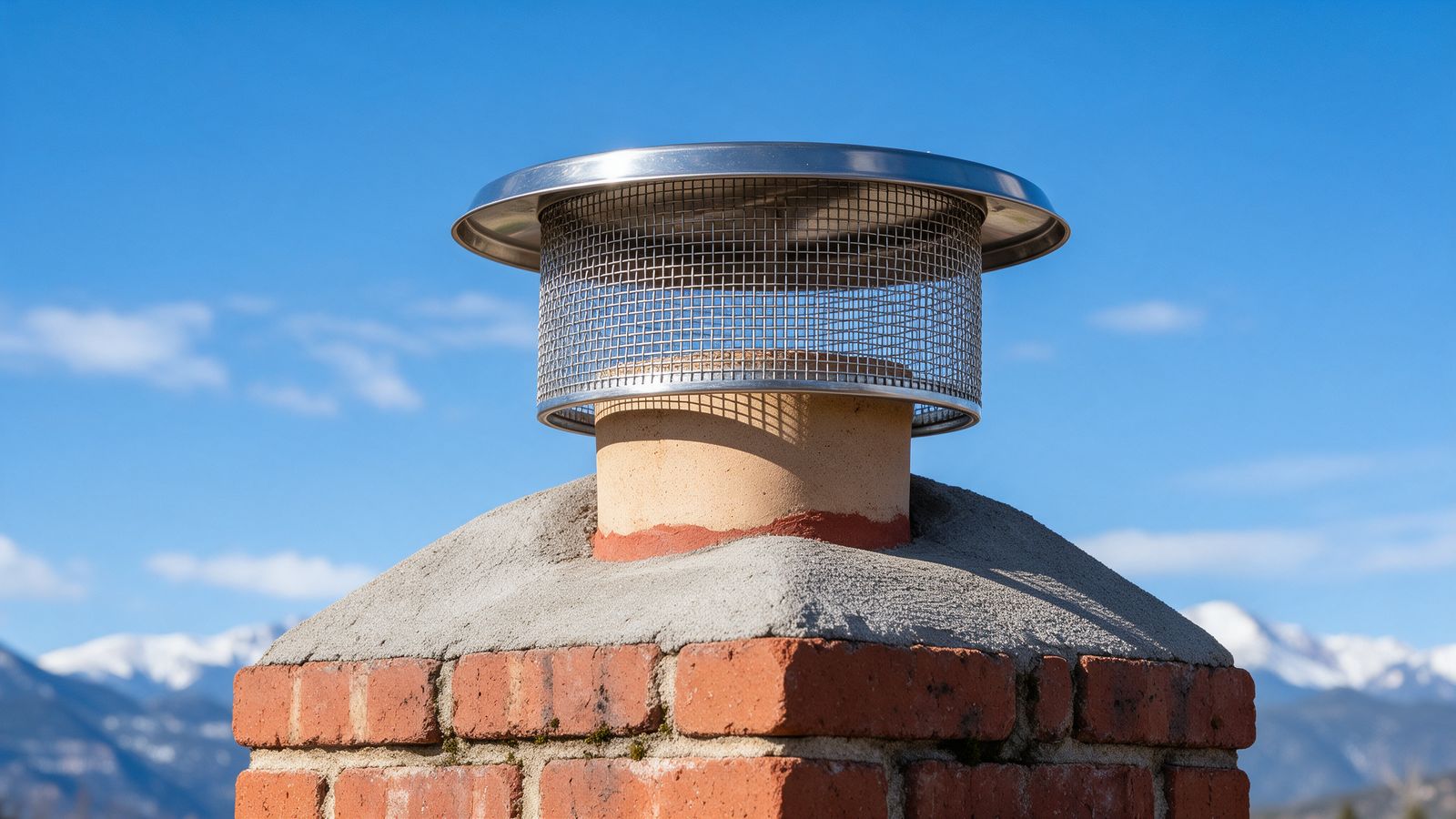
A chimney cap covers the flue opening. A chimney crown sheds water from the masonry surrounding that opening. They sit close together and often appear in the same rooftop photograph, but they protect different parts of the system. Replacing one does not automatically repair the other. A framed chimney chase may also have a metal chase cover, which adds a third component to the conversation.
Knowing these names helps a Parker homeowner read an estimate, describe visible damage and avoid paying for the wrong repair. The goal is not to diagnose a chimney from the ground. It is to understand what the contractor inspected and why a particular part needs attention.
What the cap actually does
A cap provides a cover above the open flue while leaving an exhaust route. Depending on its design, it may also include screening to reduce animal entry and limit escaping sparks. The cap must suit the chimney or vent system. A masonry flue cap and the termination for a factory built metal chimney are not interchangeable accessories.
Caps may serve a single flue, several flues or a larger chimney top. Their fasteners can attach to clay tile, masonry or a manufacturer specified component. Correct fit includes opening dimensions, exhaust clearance, screen condition and attachment strength. A cap that looks substantial can still be wrong for the underlying vent.
Material choice affects corrosion and maintenance. Ask for the actual metal and finish rather than a description such as premium cap. Stainless steel, copper and coated steel have different characteristics, but installation details still matter. A durable metal cannot compensate for unstable support or screws that damage a cracked flue tile.
What the crown actually does
The crown is the sloped surface over a masonry chimney wall and around its flue tiles. It directs precipitation away from the top of the masonry. A suitable crown has drainage geometry, sound material and details that accommodate movement where the flue passes through it. Water should not collect around a tile or run straight down the brick face.[1]
Crowns may develop cracks, loose edges or failed joints. The repair depends on the condition beneath the visible surface. A coating can be appropriate for certain limited defects on a stable substrate. Broad deterioration, missing thickness or poor drainage may require reconstruction instead.
Calling every top surface a crown can confuse an estimate. A metal cover over a framed enclosure is normally a chase cover. Its repair concerns slope, seams, collars and metal condition rather than concrete cracking. Identify the construction before comparing prices or products.
“The cap protects the flue opening while the crown protects the surrounding masonry from water entering at the top.”
Compare the components directly
| Component | Main purpose | Common defect | Typical investigation |
|---|---|---|---|
| Flue cap | Cover the exhaust opening | Missing lid or damaged screen | Fit, attachment and vent clearance |
| Masonry crown | Drain the chimney top | Cracks or deteriorated edges | Substrate, slope and tile joints |
| Chase cover | Close a framed enclosure | Rust or leaking collar | Metal seams and drainage |
| Roof flashing | Divert water at roof intersection | Failed overlap or attachment | Roofing and counterflashing details |
These components overlap in their water protection role, but each needs its own diagnosis. A complete inspection may find several defects. The estimate should explain their relationship instead of treating the chimney top as one undifferentiated repair.
Why a new cap may not stop a leak
Rain can enter through an open crown crack outside the area covered by a single flue cap. Water can also pass through failed flashing at the roof or through deteriorated masonry. A new cap limits direct entry into the flue, but those other routes remain available.
Conversely, a new crown does not cover the flue opening. If the flue has no suitable cap, precipitation or animals can still enter. Correct crown work and correct cap work are complementary, not competing upgrades. The useful question is which defects the inspection documented.
National Park Service masonry guidance also cautions against incompatible repairs that change moisture movement.[2] Sealing every visible surface without understanding drying routes can create new problems. Ask the contractor to distinguish water shedding, crack repair and masonry treatment in the proposal.
Do not confuse a cap with a draft cure
Wind can affect chimney performance, and some terminations are designed for particular conditions. However, smoke entering a room can also involve house pressure, cold flues, obstructions, appliance sizing or vent design. Buying a different cap without investigating those factors can leave the original complaint unchanged.
A cap must not create an unintended restriction. Fine mesh may collect soot, frost or debris; damaged screens may block the opening. The service plan should include access for checking and cleaning the termination. Any replacement on a listed metal chimney should follow that system's approved parts and instructions.
If smoke or a carbon monoxide alarm accompanies the complaint, stop using the appliance and respond to the hazard. The cap discussion can wait until the system is safe to evaluate.
Recognize clues without climbing the roof
From the ground, look for a missing or tilted cap, hanging metal, loose masonry and obvious storm damage. Inside, note new debris, dripping or animal sounds. Use photographs from a safe location and avoid leaning ladders against damaged chimney material.
Hairline cracks may not be visible from below, and a cap can conceal damaged tile. That is why a contractor should document the top directly when access is safe. Ask for photographs that show the whole termination as well as close views of individual defects. Context helps distinguish a minor surface issue from a wider failure.
Choose the repair by condition
- Identify whether the chimney is masonry or a framed metal system.
- Name each top component shown in the inspection photographs.
- Separate cap damage, crown defects, chase cover failure and flashing issues.
- Review repair options for each documented condition.
- Confirm compatible products, fastening and required clearances.
- Arrange follow up inspection or maintenance access after installation.
For a crown repair, ask how loose material will be removed and how the flue joint will accommodate movement. For a cap replacement, ask what supports it and how the screen can be serviced. For a chase cover, ask how the new metal will drain and how penetrations will be detailed.
Plan wildlife protection carefully
A screened cap can help reduce animal entry, but the chimney must be clear before exclusion. Installing a cap over an occupied nest or trapped animal creates another problem. Colorado Parks and Wildlife recommends preventing chimney entry, while federal guidance explains that active migratory bird nests can be protected.[3][4]
If chirping or scratching is present, arrange species identification and lawful removal before closing the opening. Do not light a fire to drive wildlife out. A homeowner should also avoid handling bats; possible contact calls for advice from animal control or public health professionals.
Ask for an estimate you can compare
The proposal should use the same component names as the inspection report. Request product details, photographs, attachment method and a description of any related masonry work. Determine whether debris removal, roof protection and disposal are included. A vague line reading chimney top repair is difficult to compare with a detailed alternative.
Price alone cannot tell you whether two contractors are offering the same scope. One may include a rebuilt crown and a new cap; another may include only a coating. Clarify the difference before deciding, especially if the lower price leaves an identified defect untreated.
Keep the component names on the final invoice consistent with the photographs. If future staining appears, that record shows which surfaces and connections were actually repaired. It also prevents a later contractor from assuming that a cap replacement included crown reconstruction or that new flashing addressed every masonry defect above the roof.
Retain dated photographs of every component.
Keep both parts in the regular documented annual chimney maintenance plan
Caps and crowns weather differently, so check both during regular chimney inspections. Revisit the top after significant damage is suspected, and keep installation photographs with the household records. New staining or debris should prompt a fresh assessment rather than an assumption that the newest part has failed.
Parker Homestead Chimney's cap installation and crown repair service pages provide the appropriate starting points for discussing these components. Share the symptoms and any inspection images when requesting a visit. A clear description helps the contractor evaluate the entire chimney top and explain which repair belongs where.
Sources and further reading
- CSIA Water and Your Masonry Chimney
- National Park Service Preservation Brief 2 Repointing Mortar Joints
- Colorado Parks and Wildlife Protect Your Home From Wildlife
- US Fish and Wildlife Service Bird Nests
Sources accessed October 15 2026. Product manuals and applicable local requirements control specific installations.