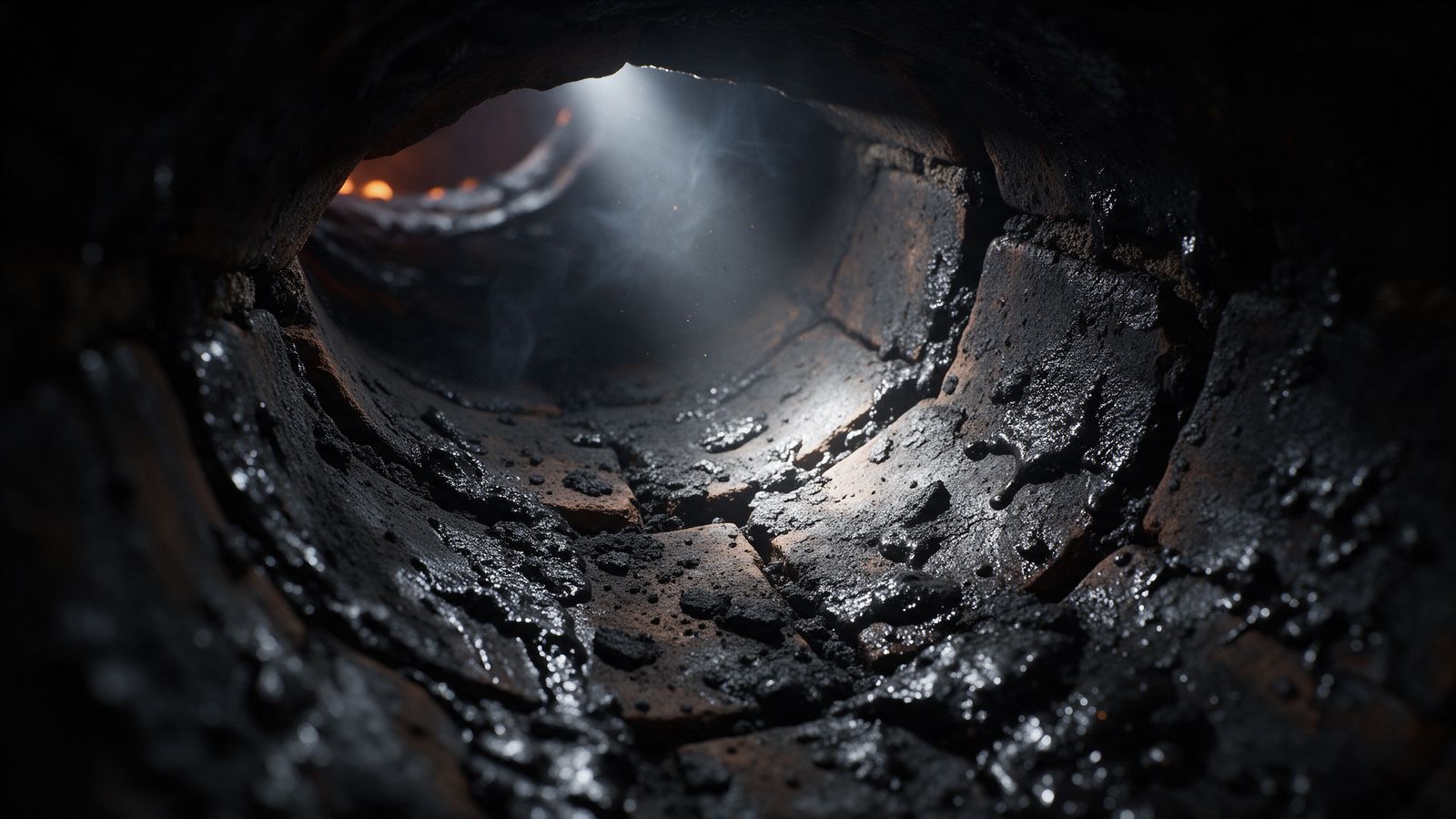
A chimney fire is a fire in the venting system, often involving accumulated combustible deposits from wood burning. It can be loud and visible, or it can occur without a dramatic signal inside the room. The safest response to a suspected active chimney fire is to leave the building and call 911. Do not climb onto the roof, investigate from the fireplace opening or continue burning to see whether the noise stops.
For Parker homeowners, understanding warning signs is useful before an emergency and after an unexplained event. It does not provide a home inspection method. A chimney that looks ordinary from the living room can still have damaged flue joints, warped metal or concealed heat exposure that requires professional evaluation.
How combustible deposits develop
Wood combustion releases smoke, gases, moisture and particles. As the exhaust moves through a cooler chimney, some material can collect on internal surfaces. Creosote is combustible, and accumulated deposits can become fuel for a chimney fire. EPA guidance connects maintenance, suitable fuel and correct operation with reducing this risk.[1]
Wet wood and restricted combustion air can contribute to smoky burning. An oversized or cold flue can also affect how exhaust behaves. These conditions should be evaluated together. Blaming a particular tree species without checking moisture, operation and venting misses the broader system.
A chimney fire is not a cleaning technique. Intentionally burning an unusually hot fire to remove deposits can expose the chimney and surrounding construction to conditions they were not designed to tolerate. Follow the appliance manual rather than informal advice about burning the chimney clean.
Signs that require immediate action
The Chimney Safety Institute of America describes active chimney fire reports involving unusual roaring, dense smoke, intense heat and flames or material leaving the chimney top.[2] Any one of those observations can justify an emergency response. Do not wait for every sign to appear.
- Leave the building and keep other people from entering.
- Call 911 from a safe location and describe the chimney or fireplace concern.
- Tell responders about fuel type, connected appliances and anyone unaccounted for.
- Follow fire department instructions and remain outside until cleared.
- Keep the system out of service afterward until the required evaluation is complete.
Do not pour water into a hot fireplace or attempt a rooftop intervention. Emergency suppression decisions belong to trained responders. An extinguisher or chimney product kept nearby is not a reason to delay evacuation or emergency communication.
“A suspected chimney fire needs emergency response first and a documented chimney evaluation before the next fire.”
Keep emergency instructions readily available.
Why some chimney fires go unnoticed
An event may burn within the flue without producing an obvious roar or a large flame plume. CSIA explains that less visible fires can still expose chimney materials to damaging heat.[2] The absence of a memorable emergency does not establish that every internal component remains sound.
Homeowners may first notice changed draft, unusual debris or a distorted cap. A technician may find altered deposits or damaged components during inspection. Those findings require interpretation; a single photograph should not be presented as conclusive evidence without explaining its location and significance.
This is especially relevant after a newly purchased home changes hands. A buyer may have no history of an earlier event. Inspection records, appliance manuals and service invoices are more useful than an assumption that the last owner would have mentioned every problem.
Clues that warrant professional investigation
| Observation | Why it matters | Appropriate response |
|---|---|---|
| Clay pieces in the firebox | Possible liner damage | Stop use and identify the source |
| Distorted metal at the termination | Possible heat or mechanical damage | Inspect the complete vent assembly |
| New smoke leakage | Possible loss of containment | Stop use and evaluate venting |
| Unusual deposits after an event | Possible changed combustion conditions | Document before cleaning |
| Exterior cracking or displacement | Possible masonry or structural distress | Assess stability and internal condition |
These clues can have causes other than a chimney fire. The point is to investigate rather than label the cause from appearance alone. Cleaning away evidence before documenting it can make later analysis and insurance review more difficult.
What happens after the fire department leaves
Firefighters address the emergency. Their departure does not replace a chimney inspection or approve the fireplace for continued use. CSIA advises keeping a chimney out of service until it has been swept and evaluated after a suspected fire.[3]
The next inspection should match the event and the system. It may include video examination of flue surfaces, accessible attic areas, the appliance connection, termination and surrounding construction. The report should state what was inspected, what remained inaccessible and which findings prevent use.
If cleaning is needed to expose surfaces, preserve photographs of relevant deposits and damage first. Ask the contractor how the inspection sequence will protect useful evidence. When an insurer is involved, contact the insurer promptly and follow its documentation instructions without assuming coverage or a particular claim outcome.
Understand the repair decision
Masonry liners may have cracked tiles, failed joints or missing sections. Factory built metal chimneys can have distortion, separated joints or other damage to a listed assembly. Repairs must suit the actual construction and manufacturer requirements. A generic patch or a new cap does not establish that the remaining vent is suitable.
Some systems may require relining, component replacement or broader reconstruction. Others may need further investigation before scope can be determined. Ask for the evidence behind each recommendation and whether the proposed work addresses the cause, the damage or both.
Avoid accepting a promise that sweeping alone makes a damaged chimney safe. Sweeping removes deposits. It does not restore cracked tiles, required clearances or structural support. The return to service decision should be documented separately from the cleaning invoice.
Reduce the conditions that allow another event
Schedule an annual chimney inspection and have cleaning or repairs completed when needed. EPA and CSIA homeowner guidance both emphasize regular professional attention, but the cleaning interval still depends on use and condition.[1][4] A frequently used wood stove can need attention sooner than an occasional fireplace.
Burn only fuel approved for the appliance. Test firewood on a freshly split interior face and follow moisture meter instructions. EPA recommends dry wood; wet fuel wastes energy evaporating water and can increase smoke. Do not burn household waste, treated lumber or accelerants to improve a reluctant fire.
Operate air controls according to the manual. Repeatedly forcing a stove into a smoky, smoldering condition can contribute to deposits. If normal use produces persistent smoke, the answer may involve fuel, appliance condition or draft rather than simply opening another window indefinitely.
Include animals and obstructions in the inspection
Nests and debris can obstruct the exhaust route or introduce combustible material. Animal sounds should be addressed before lighting a fire. Never use smoke to force wildlife out, and do not install a screen over an occupied opening. Identification and lawful removal come before exclusion.[5]
The cap and screen also need inspection. A blocked screen can affect venting, while a missing screen may permit entry. The correct termination should protect the opening while maintaining the venting area required for the system. Improvised mesh can create its own maintenance problem.
After repairs, review the operating routine with every regular user. Explain any changed fuel requirements, controls or maintenance interval associated with the repaired system. Store the report with the appliance manual and note which conditions require an earlier inspection. If the original event involved uncertain history, preserve that uncertainty in the record rather than replacing it with an unsupported conclusion. Accurate records help the next technician distinguish documented damage from assumptions made during earlier conversations.
Prepare the household before each heating season
Test smoke and carbon monoxide alarms according to their instructions. Review escape routes and make sure everyone knows where to meet outside. Store cooled ashes in a covered metal container outside, away from combustible materials, following local fire safety guidance.[6]
Keep service records where another household member can find them. Record the appliance model, inspection date and any unresolved findings. A reminder on a calendar is useful only if the required work actually gets completed before the fireplace returns to use.
For a nonemergency concern, contact Parker Homestead Chimney through the inspection page and describe the event, observations and available records. For an active fire, leave the home and call 911 first. Clear separation between emergency response, inspection and repair helps the household take the right action at each stage.
Sources and further reading
- US EPA Frequent Questions About Wood Burning Appliances
- CSIA Preventing Chimney Fires
- CSIA What You Need to Know After a Chimney Fire
- Chimney Safety Institute of America Homeowner Resources
- Colorado Parks and Wildlife Protect Your Home From Wildlife
- US Fire Administration Heating Fire Safety
EPA Burn Wise pages are retained as historical technical guidance. Verify current regulations and incentive terms with the responsible authority.
Sources accessed October 15 2026. Product manuals and applicable local requirements control specific installations.