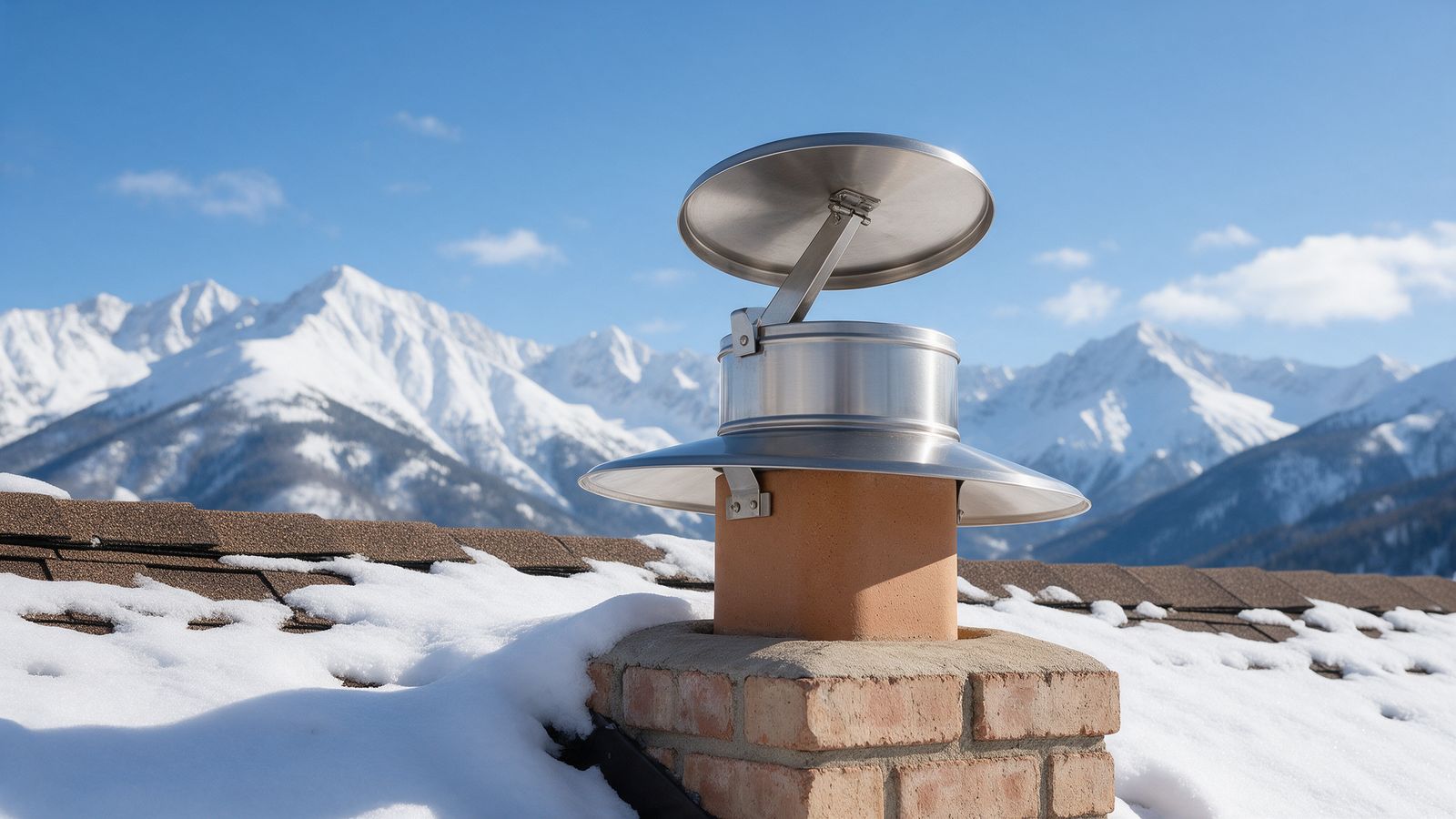
A top sealing damper can reduce airflow through an unused compatible fireplace flue, but it must match the fireplace and fuel. It is not a universal replacement for every cap or throat damper. Before installing one, identify all connected appliances and verify that the product instructions permit the proposed use. An incorrectly closed exhaust route can create a serious combustion hazard.
For Colorado homeowners dealing with cold drafts, the first question is where the air is entering and what the chimney serves. A damper cap may help a suitable wood fireplace. It will not repair a damaged liner, solve every pressure problem or replace required venting for a gas appliance.
Understand the three pieces people often confuse
A rain cap covers the flue opening while permitting exhaust. A throat damper is located near the fireplace opening and controls that passage. A top sealing damper closes near the chimney termination, usually through a cable or operating mechanism accessible at the fireplace. Some products combine damper and protective cap functions.[1]
These devices are not interchangeable by name alone. A cap with screening does not necessarily seal airflow. A damper without the appropriate protective configuration may not provide the animal exclusion the homeowner expects. Ask exactly what the selected assembly does in the open and closed positions.
The chimney crown remains a separate component. It sheds water from the masonry around the flue. Installing a top damper does not repair cracked crown material, failed flashing or a rusted chase cover. Any leak complaint should be assessed independently from the draft complaint.
Check fuel compatibility before discussing savings
Manufacturer restrictions are decisive. U.S. Fireplace Products states that its Energy Top products are not for chimneys serving vented gas logs and lists additional appliance restrictions.[1] Other products have their own instructions. Do not transfer approval from one brand or model to another.
Vented gas log arrangements require an exhaust route consistent with their instructions and applicable code. A homeowner should not install a closing damper to reduce drafts without first checking the entire gas system. A fireplace converted after a top damper installation needs a fresh compatibility review.
Factory built wood fireplaces also require verification. Adding an accessory to a listed metal chimney can affect the tested assembly. Obtain the fireplace and chimney manufacturer's approval where required rather than assuming that an adapter makes every installation acceptable.
“A damper must suit the fuel and remain fully open whenever the fireplace requires an exhaust path.”
Find the source of the cold draft
Air may enter through an open or poorly sealing throat damper. It can also move through gaps around the fireplace enclosure, masonry leaks or a pressure imbalance within the home. A top damper addresses the flue opening; it does not seal every path around the fireplace.
Note whether the draft changes with wind, bathroom fans, a clothes dryer or the kitchen hood. These observations help distinguish an imperfect closure from broader pressure effects. Persistent smoke during use requires its own investigation rather than a tighter closed position after the fire.
CSIA homeowner guidance notes that a suitable top mounted damper can reduce downward airflow and associated odor in some situations.[2] That does not eliminate the need to remove deposits or correct moisture problems. The underlying chimney still needs inspection and maintenance.
Compare the available approaches
| Approach | Intended role | Question to resolve |
|---|---|---|
| Repair existing throat damper | Restore operation near the firebox | Is the assembly repairable and compatible |
| Top sealing damper | Close a suitable unused flue at the top | Does the product permit this fireplace and fuel |
| Compatible rain cap | Protect an opening while venting | Does it maintain required exhaust clearance |
| Enclosure air sealing | Address leaks around the fireplace | Can work preserve listed clearances and ventilation |
Sometimes more than one issue needs attention. A top damper may reduce one airflow route while gaps around a chase remain. Ask the inspector to explain which part of the complaint each proposed repair addresses.
Assess the chimney top before installation
The mounting surface must be suitable for the product. Cracked tile, loose masonry or crown deterioration can undermine attachment. Installing a new device over unstable material hides a problem that still needs repair. Request photographs that show the support as well as the accessory.
The open position also needs evaluation. The cap and damper must provide the passage required for the fireplace and flue. Nearby flues, unusual tile dimensions or restrictive geometry can affect selection. Choose from measured dimensions and instructions rather than nominal size labels alone.
Weather exposure matters in Colorado, but no accessory should be sold as immune to ice, debris or maintenance. Ask how the device will be checked after storms and how the operating mechanism will be serviced. Follow the product instructions if it sticks; do not force a cable until something breaks.
Plan installation and operation together
- Identify the fireplace, chimney construction and every fuel connection.
- Confirm the selected product's permitted applications.
- Inspect and repair the supporting tile or masonry as necessary.
- Install the assembly and operating mechanism as instructed.
- Verify the full open and closed positions before use.
- Teach all users the required operating sequence and maintenance checks.
The household should know how to confirm that the damper is open before lighting. A handle position is useful only when the mechanism functions correctly. If the opening cannot be confirmed, do not start a fire. Arrange service instead of testing the system with smoke.
Close the damper only at the time and under the conditions allowed by the fireplace and damper instructions. Coals can remain active after flames disappear. A tight seal must not be used to extinguish a fire or contain combustion products inside the home.
Show every regular user the mechanism.
Make energy claims specific and modest
A tighter closure can reduce air movement through a suitable idle flue. Actual energy savings depend on the old damper, pressure conditions, climate and how often the fireplace is used. An installer should not promise a fixed percentage reduction in the heating bill without a valid basis for that home.
Comfort can improve even when financial savings are difficult to isolate. Less cold air at the hearth may make nearby seating more usable. Still, compare the accessory's purpose with other air leakage or insulation problems in the room. One chimney part cannot correct the whole building envelope.
Ask whether the proposal includes diagnosis, support repair and future access. Comparing hardware prices alone ignores installation and compatibility work. The least expensive device is poor value if it cannot be approved for the fireplace or requires another replacement after a planned fuel conversion.
Keep maintenance and wildlife checks in the plan
Deposits, debris and weather can affect the termination and moving parts. Include the damper in regular chimney inspections, and tell the sweep which product is installed. Cleaning access and safe removal should be considered before the first installation, not improvised later.
Confirm that no animals or active nests are present before exclusion work. A closing device must not trap occupants. If wildlife is suspected, resolve species and occupancy questions first, then restore suitable protection once the chimney is clear.[3]
Make the operating reminder visible to occasional users. A guest may understand the throat damper from another fireplace but not recognize a cable operated top closure. Explain both the confirmation step before lighting and the conditions required before closing. If the home is sold, include the damper manual and compatibility information with the fireplace records. A future fuel conversion should trigger a review of the accessory rather than leave it in place by habit. Good documentation helps prevent a useful closure from becoming an overlooked obstruction after the system changes, especially when a new owner has never operated that particular device before.
Include the operating demonstration in the final handoff to the homeowner.
Prepare the service conversation
Photograph the fireplace opening, any visible controls and the appliance label. Describe when the draft occurs and whether the fireplace burns wood or has been converted to gas. Include plans for a future insert or fuel change, because those plans may alter the best approach.
Parker Homestead Chimney's cap service page is the relevant place to ask about termination options and compatibility. Request a written explanation of the selected product, permitted use and operating requirements. A successful installation should give the household a useful closure for a suitable fireplace and clear instructions for keeping its exhaust route open during operation.
Sources and further reading
- U S Fireplace Products Energy Top Application and Installation Requirements
- Chimney Safety Institute of America Homeowner Resources
- Colorado Parks and Wildlife Protect Your Home From Wildlife
Sources accessed October 15 2026. Product manuals and applicable local requirements control specific installations.