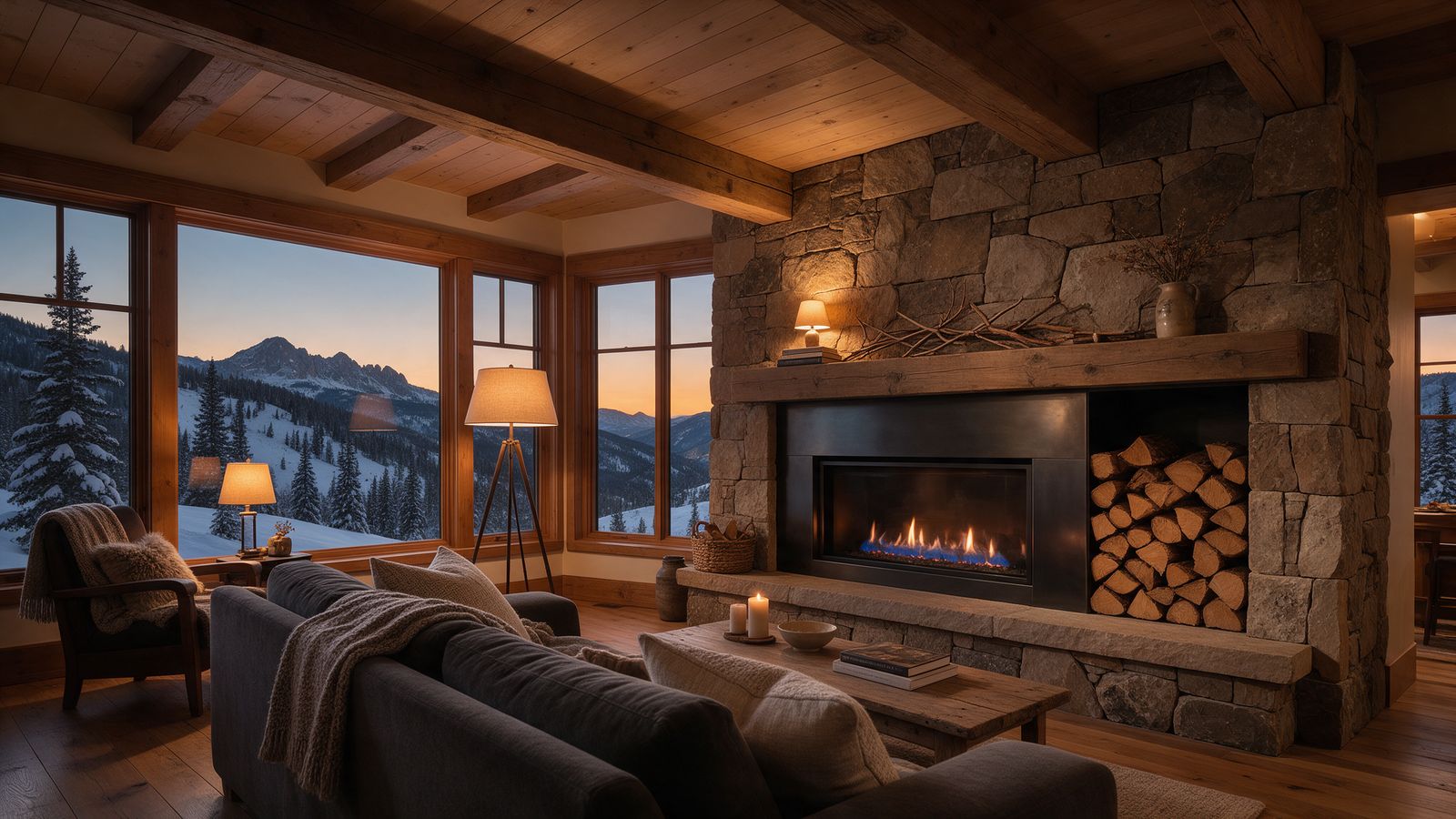
The better fireplace depends on how the household plans to use it, what the home can accommodate and which maintenance tasks the owner will reliably perform. Gas offers controlled operation without carrying logs or managing ashes. Wood provides a real fuel fire but requires dry storage, correct burning and attention to deposits. Neither choice removes the need for suitable venting, installation and inspection.
For a Colorado home, start with the existing system rather than a showroom photograph. A masonry fireplace, factory built fireplace and insert have different conversion options. The practical comparison is between complete installed systems that fit the property, not between two appliances with attractive advertised prices.
Define whether the goal is atmosphere or useful heat
A decorative fire and a heating appliance serve different priorities. An open wood fireplace may satisfy an occasional evening gathering while providing limited control over useful room heat. A listed insert can change how heat is delivered, but it also changes installation, venting and maintenance requirements.
Gas products include decorative logs, gas fireplaces and gas inserts. They should not be grouped under one performance claim. A direct vent insert typically uses a specified intake and exhaust arrangement. A decorative log set in an open fireplace follows a different venting and damper strategy. Compare the exact product type before discussing efficiency.[1]
Ask how often the fireplace will run and which room needs heat. A large maximum input number can be a disadvantage in a small room if the appliance cannot turn down enough. Comfort depends on controllable output, room layout and operating habits, not simply the largest advertised capacity.
Compare daily ownership honestly
| Decision | Gas system | Wood system |
|---|---|---|
| Starting a fire | Controls and ignition system | Fuel preparation and manual lighting |
| Fuel storage | Utility supply or propane arrangement | Dry, accessible firewood storage |
| Routine cleanup | Glass and appliance service as specified | Ash handling and hearth cleanup |
| Vent attention | Condition, connections and termination | Condition plus soot and creosote |
| Heat control | Model dependent flame and thermostat control | Fuel load and approved air control |
The table describes typical differences, not guarantees. Specific models may have electronic controls, catalysts, blowers or other components that change the ownership routine. Read the manuals for finalists before making the purchase.
“Choose the fuel and appliance that suit the home's venting, the room's heating needs and the maintenance you will actually do.”
Understand installation constraints
A gas conversion may require a properly sized fuel line, shutoff, electrical supply and approved vent route. Existing gas service elsewhere in the home does not prove that a convenient branch line has enough capacity. The installer should evaluate the complete demand and route rather than estimate from the fireplace alone.
A wood insert requires a suitable host fireplace and a compatible chimney connection. Opening dimensions are only the beginning. Hearth protection, combustible clearances, chimney condition, liner sizing and service access also matter. A unit that physically fits can still be unsuitable for the installation.
Factory built fireplaces require special care. Their metal cabinets and chimneys are tested assemblies. Do not assume that an insert approved for masonry can be placed inside any metal fireplace. The appliance and host system instructions need to permit the arrangement.
Parker lists its adopted codes and permit information publicly.[2] Confirm requirements with the authority responsible for the property before ordering equipment. A nearby county address can have a different permitting process even when the homeowner uses Parker as the postal city.
Compare manuals before placing the order.
Treat altitude as a design input
Elevation affects combustion and venting conditions. Gas appliances may require model specific altitude settings or input adjustments. Wood systems also depend on suitable draft, chimney height and the pressure conditions around the home. There is no universal Colorado setting that can replace the manufacturer's instructions.
Ask the installer how the chosen model is approved for the site's elevation and how commissioning will verify operation. A statement that a product works in Colorado is less useful than the exact manual provision and measured startup checks. Keep those records with the appliance information.
Wind and house pressure deserve the same attention. A tight home with powerful exhaust fans can affect naturally vented combustion equipment. Existing smoke complaints should be diagnosed before assuming that changing fuels will automatically solve every venting problem.[3]
Compare operating costs without invented savings
For gas, estimate fuel use from the actual input rate, expected hours and local utility or propane charges. Include pilot operation if applicable. For wood, include delivered fuel, storage, handling and maintenance. Free logs still require cutting, drying and safe storage, and wet fuel can change performance substantially.
Compare efficiency figures only when the rating methods are equivalent. Input, output and seasonal efficiency are different measurements. A retailer's broad heating area estimate is not a room load calculation and should not be treated as a promise for a particular house.
Installation cost may outweigh a small annual fuel difference. A difficult liner route, gas extension or required electrical work can change the project budget. Request complete written scopes before deciding that one fuel is cheaper overall. Avoid counting incentives until eligibility and current program terms are confirmed.
Account for maintenance and indoor safety
Wood appliances need inspection and deposit management. Burning dry approved fuel and using the controls correctly helps, but does not eliminate maintenance. EPA recommends professional chimney attention and discourages burning waste or treated materials.[4]
Gas appliances also require service according to the manual. Burner condition, vent connections, glass seals and safety controls can affect operation. Sooting, delayed ignition or repeated shutdown should prompt evaluation rather than continued use. A carbon monoxide alarm requires immediate action for either fuel.
Both systems can create hot surfaces. Keep required barriers in place and plan furniture, toys and household traffic around the appliance. A glass front that appears calm can remain hot after shutdown. Establish routines that work when visitors or children are present, not only when the usual operator is nearby.
Ask what happens during an outage
Some gas appliances can operate without household electricity, while others depend on power or specific backup provisions. Blowers may stop even when the burner continues. Read the manual for the exact operating mode and required batteries rather than assuming that every gas fireplace supplies outage heat.
Many cordwood appliances continue producing heat without a fan, but powered accessories may stop. Pellet appliances generally have electrical requirements that must be considered separately. Never improvise electrical backup, bypass safety controls or operate equipment outside the instructions because the room is cold.
Check local burning rules before choosing wood
Colorado communities and air quality programs can restrict wood burning under particular conditions. Equipment type, property location and current advisories matter. Check the state indoor burning guidance and local requirements for the actual address before relying on wood as a routine heat source.[5]
Do not confuse outdoor fire restrictions with permission to operate an indoor appliance, or assume that EPA certification overrides every local rule. Certification, building approval and daily operating restrictions answer different questions. Retain the product label and verify the rules that apply to that equipment.
Before approving the finish design, ask where future service will occur. Gas controls, wood appliance components and blower assemblies need the access intended by the manufacturer. A surround that must be demolished for routine maintenance adds a cost that is easy to miss during shopping. Compare the final arrangement with the room furnished normally, including seating, storage and traffic. That review can reveal practical conflicts that an empty opening measurement will never show.
Use a short decision process before finishes become permanent
- Identify the existing fireplace and chimney construction.
- State the heating goal, expected use and preferred maintenance routine.
- Check venting, utilities, clearances and local requirements.
- Compare complete installed proposals and equivalent performance ratings.
- Review service access, outage behavior and operating instructions.
- Choose only after the technical scope and household expectations agree.
Bring photographs, the current appliance label and approximate room dimensions to the first consultation. Describe whether the room overheats, feels drafty or struggles to warm. Those details help turn a fuel preference into a workable system choice.
Parker Homestead Chimney's gas insert and fireplace installation pages are the relevant starting points for a project discussion. Ask for options tied to the existing home and a written explanation of venting, utility and permit work. The result should be a fireplace the household can operate comfortably and maintain consistently through Colorado's heating season.
Sources and further reading
- Regency LRI3E Gas Insert Technical and Operating Information
- Town of Parker Building Codes
- US Department of Energy Building Science Proper Ventilation for Fireplaces and Stoves
- US EPA Burn Wise Facts Figures and Health and Safety Tips
- Colorado Air Pollution Control Division Winter Air Pollution Advisory Program
EPA Burn Wise pages are retained as historical technical guidance. Verify current regulations and incentive terms with the responsible authority.
Sources accessed October 15 2026. Product manuals and applicable local requirements control specific installations.