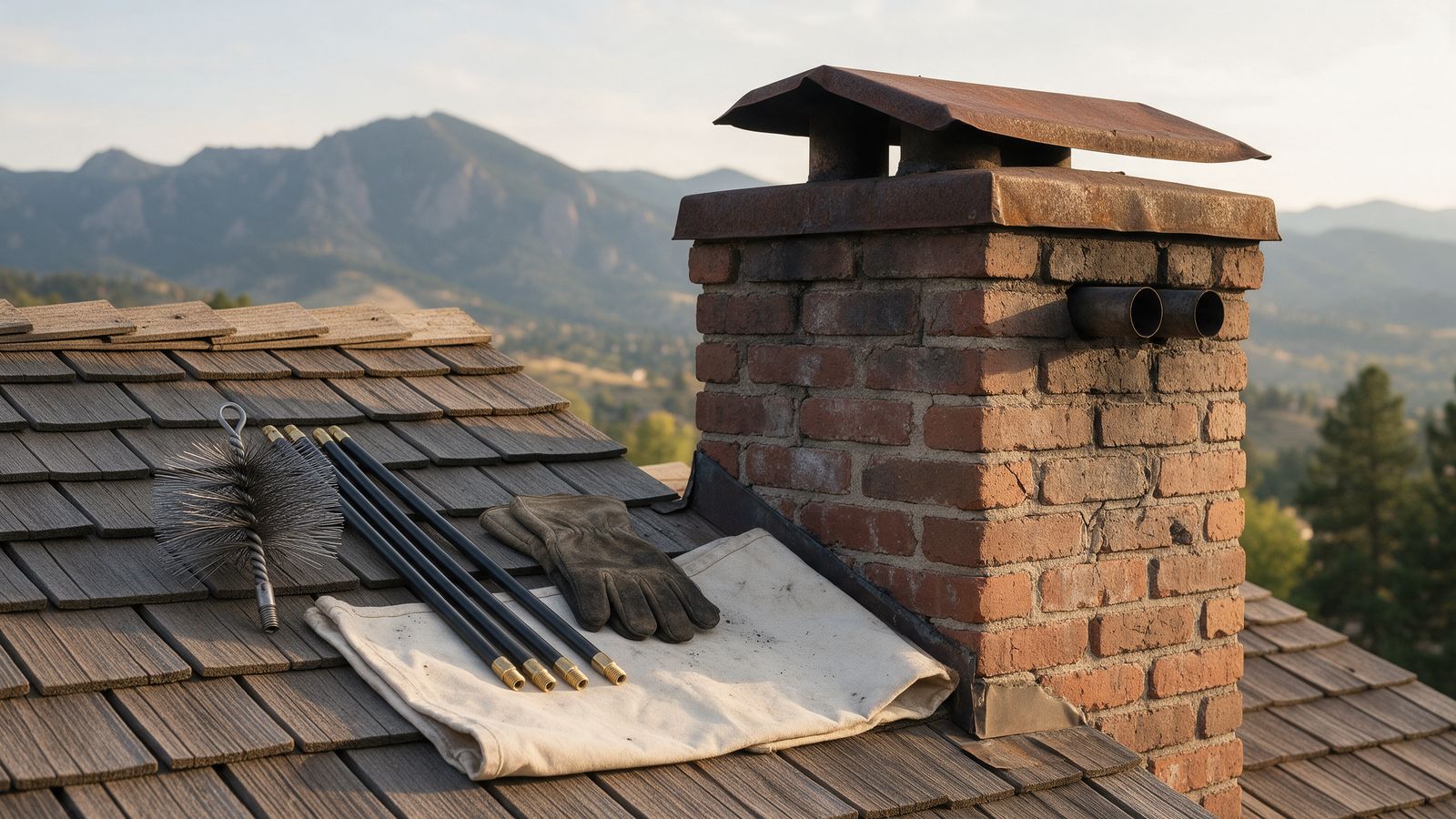
Have the chimney inspected at least annually and arrange sweeping when deposits or other conditions require it. That is more useful than a universal promise that every Colorado chimney needs exactly one cleaning each year. Frequency depends on the appliance, fuel, operating habits, vent condition and how much the system is used. A heavily used wood stove may need attention more often than a fireplace lit a few times each winter.
Inspection and sweeping are related services with different purposes. Inspection evaluates condition and suitability. Sweeping removes deposits and accessible debris. A homeowner should understand which service was performed, what was found and what should happen before the next period of use.
Use the annual inspection as the baseline
The Chimney Safety Institute of America summarizes NFPA 211 guidance as annual inspection with cleaning, maintenance and repairs when necessary.[1] An appointment should therefore begin with the system's condition, not an automatic cleaning charge or an assumption that infrequent use makes inspection unnecessary.
A chimney can develop animal nesting, water damage or loose components while idle. Gas equipment can have venting problems even though it does not generate wood creosote. A fireplace that has not been used for several years needs an appropriate assessment before restarting, especially when its service history is unknown.
Keep the inspection date separate from any recommendation for earlier follow up. The technician may suggest a shorter interval after a change in fuel, appliance or operating pattern. Record why that interval was chosen so future decisions use evidence rather than a forgotten verbal suggestion.
Keep those recommendations with the report.
Adjust the interval to actual use
A household burning several evenings a week puts a different amount of exhaust through the chimney than a household lighting a holiday fire. Track approximate use rather than relying only on the calendar. For a stove, fuel consumption can provide additional context, though no single number of cords guarantees a clean flue.
The first season with a new appliance deserves attention. Burning habits, wood quality and chimney temperatures may differ from the old system. Ask the installer or sweep when to check early operation. That review can identify an unexpected buildup pattern before it becomes the household's normal routine.
If a chimney repeatedly needs unusually frequent cleaning, ask why. Sweeping may manage the deposits while the cause continues. Wet fuel, restricted air, unsuitable vent sizing or an appliance problem may need correction. Maintenance should inform operation, not become a substitute for diagnosing recurring trouble.
“The right sweeping interval follows the condition of the flue and the way the household uses the appliance.”
Understand what changes deposit formation
EPA guidance recommends dry wood and proper appliance operation to reduce smoke and improve burning.[2] Moisture matters because energy used to evaporate water is unavailable for useful heat. A smoky fire can also send more unburned material toward cooler chimney surfaces.
Test firewood on a freshly split interior face. The outside of a log can look dry while the center remains wet. Follow the meter instructions and appliance guidance rather than judging only by color, bark or how long the seller says the wood has been seasoned.
Air controls also matter. An owner who repeatedly throttles a stove into a smoky smolder may create a different deposit pattern from one using the approved operating range. Do not compensate by overfiring. If normal instructions do not produce acceptable operation, arrange an assessment of fuel, draft and appliance condition.
Match common situations to the next step
| Situation | Useful next action | Why |
|---|---|---|
| Routine seasonal use | Annual inspection and cleaning as needed | Establishes condition before regular fires |
| Heavy wood heating | Discuss additional checks during the season | Deposits can develop before a year passes |
| New home or unknown history | Inspection suited to the transaction and system | Past damage may not be visible at the hearth |
| Fuel or appliance change | Review the venting and inspection scope | New exhaust conditions can change requirements |
| Suspected chimney fire | Stop use and arrange post event evaluation | Sweeping alone cannot confirm integrity |
This table does not replace the appliance manual. Some equipment instructions call for specific inspection or cleaning intervals that should be followed in addition to a general annual plan.
Recognize reasons to call sooner
Persistent smoke entering the room, falling debris, unusual animal sounds, changed draft and strong recurring odors warrant attention before the next scheduled appointment. They do not all prove a dirty chimney. Some indicate obstruction, pressure problems, moisture or damaged components that brushing alone will not correct.
If a carbon monoxide alarm activates, leave the building and contact emergency services according to the alarm and local guidance. If a chimney fire is suspected, evacuate and call 911. Do not wait for a cleaning appointment to resolve an active emergency.[3]
Avoid reaching into the flue to estimate deposit thickness or lighting a test fire after unusual debris falls. Homeowner observations help describe the concern, but internal assessment and rooftop work belong to people with suitable equipment and training.
Know what a sweep visit should document
- The appliance, fuel and approximate pattern of use.
- The accessible vent route and any limitations on access.
- The deposits or debris found before cleaning.
- The cleaning method and areas reached.
- Any condition that needs further inspection or repair.
- The recommended next check and the reason for its timing.
Photographs can make the report clearer, especially when the homeowner cannot see the component directly. Ask the technician to explain the location and importance of each image. A close up without context can make a minor observation difficult to distinguish from a meaningful defect.
The report should also distinguish completed work from recommendations. A swept chimney may still have an unresolved liner crack or unsuitable clearance. Keep the system out of service when the findings require it, even if the cleaning itself was successful.
Plan appointments around the household
Schedule before the period when you expect regular use. Leave time for findings that require parts, roof access or masonry work. Waiting until the first cold evening can turn an ordinary maintenance item into an uncomfortable delay, especially if the fireplace is the room's usual supplemental heat source.
Tell the company whether the fireplace was recently used and follow its preparation instructions. Let the system cool, clear a working path and move fragile items. Share appliance manuals and prior reports. Those simple steps help the visit begin with useful information rather than missing history.
After the appointment, file the report where another household member can find it. A calendar reminder should name the recommended service and any conditions requiring an earlier call. If use increases substantially, update the plan instead of treating last year's interval as permanent.
Keep dryer vent maintenance separate
Dryer vents and chimneys both carry exhaust, but they serve different appliances and collect different material. A chimney sweeping date does not establish that the dryer duct is clear. Clothes taking longer to dry, excessive heat or a burning smell require their own investigation.[4]
Clean the dryer lint filter as directed, keep the exterior termination clear and arrange duct cleaning according to the appliance and fire safety guidance. Do not install a chimney style screen over a dryer outlet without checking the applicable requirements; lint can collect and obstruct discharge.
If the household uses several fireplaces, keep a separate record for each. Two flues in the same chimney can serve different appliances and collect deposits at different rates. Label the reports by room or appliance so a clean result for one is not mistaken for approval of the other. Tell the service provider about every known connection, including equipment that is currently idle. This is especially useful in older homes where previous alterations may have changed which appliance uses a particular passage and where the homeowner does not have complete installation records.
Ask practical questions when booking for each connected appliance
Will the visit include inspection, sweeping or both? What happens if the deposits require a different removal method? Can the technician document areas that are inaccessible? What findings would mean the fireplace should remain unused? Clear answers help the homeowner compare the actual service rather than just the appointment price.
Parker Homestead Chimney's sweep and inspection pages provide the appropriate routes for discussing the system. Explain the fuel, use pattern and any changed behavior when requesting a visit. Annual inspection creates the baseline; condition and operating history determine when the next cleaning belongs on the calendar.
Sources and further reading
- Chimney Safety Institute of America Homeowner Resources
- US EPA Burn Wise Facts Figures and Health and Safety Tips
- US Consumer Product Safety Commission Carbon Monoxide Fact Sheet
- US Consumer Product Safety Commission Overheated Clothes Dryers Can Cause Fires
EPA Burn Wise pages are retained as historical technical guidance. Verify current regulations and incentive terms with the responsible authority.
Sources accessed October 15 2026. Product manuals and applicable local requirements control specific installations.