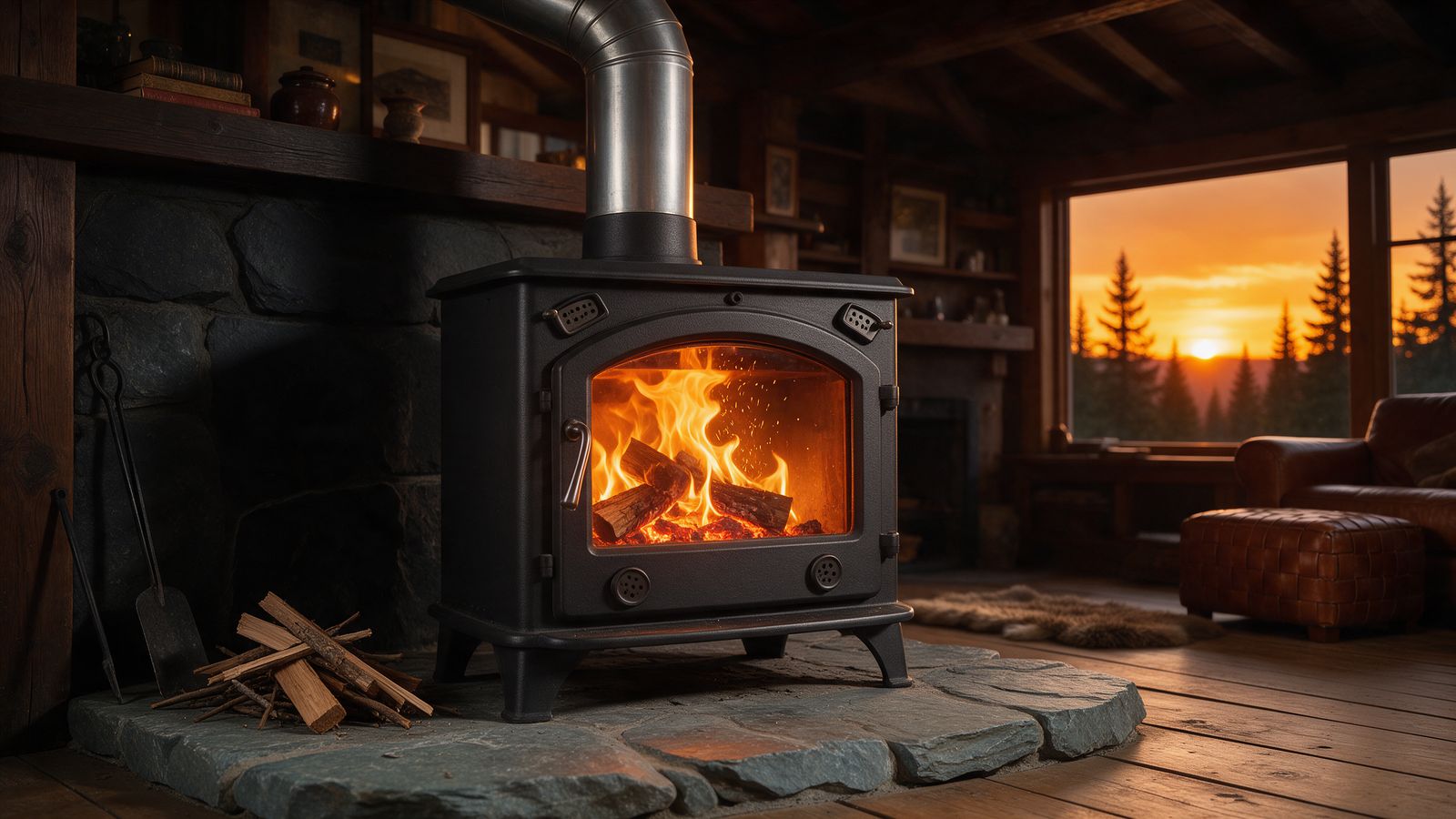
Reduce creosote buildup by burning suitable dry fuel, operating the appliance according to its manual and keeping the chimney inspected and cleaned when needed. These measures work together. Dry wood does not correct an unsuitable flue, and a recent sweeping does not make prolonged smoky operation harmless. Prevention begins with how the whole system burns and vents.
Creosote is combustible material that can accumulate inside wood burning vent systems. Its presence, form and rate of accumulation depend on several conditions. A homeowner's goal should be to reduce the causes of deposits and arrange appropriate inspection, not to prove that a chimney is safe by looking through the fireplace opening.
Understand where the deposits come from
Wood combustion releases gases, moisture and particles. As exhaust travels through cooler sections of the vent, material can collect on internal surfaces. Incomplete combustion and conditions that cool the exhaust can contribute to the process. EPA homeowner guidance connects suitable fuel, correct operation and professional maintenance with cleaner wood burning.[1]
Deposits can look different from one system to another. Loose soot, flaky material and hard glazed deposits do not necessarily respond to the same cleaning method. The technician should describe what was found and why a particular removal approach is appropriate. A generic cleaning promise may not cover every condition.
Creosote is not evidence that one particular wood species is always forbidden. Moisture, fuel loading, air supply, appliance condition and chimney design must be considered together. Choosing a fashionable hardwood while continuing to smolder wet loads can leave the main contributors unchanged.
Measure fuel moisture properly
EPA recommends dry firewood and describes moisture testing as a practical check.[2] Split a representative log and test the fresh interior surface according to the meter instructions. Exterior surfaces can be misleading because they may dry before the center. Sample several pieces rather than trusting one reading.
Keep ready wood separate from wood that needs further drying. Storage should allow air movement while limiting wetting from above and below. A tightly wrapped tarp around a damp pile can interfere with drying. Stable stacking and a suitable location matter as much as the purchase date.
Do not assume that standing dead or kiln dried wood arrives ready in every case. Large pieces, mixed deliveries and exposure after processing can change moisture condition. Use readings and observed performance rather than a label alone, and follow the appliance's permitted fuel requirements.
“Cleaner burning starts with suitable fuel and operation, then relies on inspection to confirm what the chimney is collecting.”
Operate within the appliance instructions
Air controls, fuel loads and startup procedures differ between stoves and fireplaces. Read the manual for the exact model. An operating habit that worked with an older appliance may not suit a newer catalytic or noncatalytic system. Do not substitute an online temperature rule for manufacturer guidance.
Avoid routinely forcing a wood appliance into a smoky smolder to stretch the load. At the same time, do not overfire it in an attempt to keep the flue clean. Excessive heat can damage components. The intended operating range is the correct target; both chronic smoldering and uncontrolled firing can cause trouble.
If the appliance cannot run acceptably within its instructions, seek diagnosis. Wet fuel, poor draft, restricted air supply or equipment condition may be involved. The answer should identify the cause instead of asking the homeowner to compensate indefinitely with an abnormal operating routine.
Keep the venting system matched to the appliance
Chimney height, cross section, route and exposure affect exhaust behavior. A cold exterior flue or an unsuitable large passage can influence cooling and draft. A liner recommendation should follow the appliance requirements and measured chimney condition, rather than a general promise that one diameter solves everything.[3]
Changes to the home can matter too. Air sealing, new exhaust fans or appliance replacements may alter pressure conditions and venting performance. Describe recent work when an inspection finds a changed deposit pattern. The technician needs the operating context as well as a camera image.
Do not install a fan, damper or cap simply to mask a draft complaint without checking compatibility. Accessories can change the system and may require manufacturer approval or electrical work. They should follow diagnosis, with a clear explanation of the condition they address.
Use observations to guide the next check
| Observation | Possible contributor | Useful response |
|---|---|---|
| Damp fuel or repeated hissing | Excess fuel moisture | Test fresh split surfaces |
| Persistent smoky operation | Air, draft or appliance issue | Review operation and arrange assessment |
| Rapidly recurring deposits | Changed use or system conditions | Shorten follow up and investigate cause |
| Hard glazed material | Deposits needing specialized removal | Ask for a method specific to the condition |
| Debris or animal sounds | Possible obstruction | Stop use until evaluated |
These observations help describe a concern. They do not establish that a particular deposit is safe to leave or that a chimney can wait until a fixed date.
Schedule inspection instead of guessing from the calendar
CSIA summarizes the annual inspection baseline with cleaning and repairs when necessary.[3] Heavy use, new equipment or a history of rapid buildup may justify additional checks. Ask the sweep to recommend an interval based on findings and household use, and record the reason for that recommendation.
A useful report identifies the appliance, accessible route, deposit condition and any remaining defects. Photographs should show location and context. If the flue cannot be evaluated through deposits, the cleaning and inspection sequence should explain how visibility will be improved.
Keep the difference between removal and repair clear. Mechanical sweeping can remove suitable deposits, but it cannot restore cracked tiles or required clearances. A cleaned system may still need work before continued use. Approval should follow the documented findings, not the appearance of a swept firebox.
Treat additives as limited products
Creosote treatment products and cleaning logs are not substitutes for inspection and mechanical cleaning. CSIA explains the role of mechanical sweeping and evaluation in its homeowner resources.[3] Any product used must also be permitted by the appliance manufacturer and applied according to its instructions.
Ask what the product is expected to change and what still needs removal afterward. Loosened material can remain inside the system. A package claim should not become a guarantee that hidden joints, screens or connectors are clear and sound.
Never try to burn deposits out with an unusually hot fire. A chimney fire can damage masonry and metal systems, including areas not visible from the room. If an event is suspected, stop use and arrange evaluation rather than assuming that the fire accomplished a successful cleaning.[4]
Build a routine the household can follow
- Buy and store approved fuel with measured moisture in mind.
- Keep the appliance manual available near the service records.
- Use approved loads, controls and startup procedures consistently.
- Note changes in smoke, draft, glass deposits or fuel consumption.
- Arrange annual inspection and earlier follow up when recommended.
- Complete required cleaning or repairs before the next period of use.
Make sure every regular user understands the same routine. One household member burning dry wood correctly does not offset another repeatedly loading unsuitable scraps. Clear habits reduce variation and make changes in system behavior easier to recognize.
Use the next inspection as feedback on any operating changes. If the household switched fuel suppliers or corrected a loading habit, compare the new findings with the previous report under similar use. A cleaner result is useful information, but it does not establish a permanent interval for every future season. Weather, consumption and equipment condition can change again. Keep the observations specific enough that the next recommendation can be explained. This approach turns maintenance into a record of the actual system instead of a recurring appointment whose findings are forgotten as soon as the invoice is filed.
Retain the photographs so changes can be compared over time.
Discuss the comparison at each inspection.
Respond promptly to warning signs
Roaring in the chimney, flames at the termination or a suspected chimney fire require evacuation and a 911 call. A carbon monoxide alarm requires leaving the building and emergency assistance. Do not remain indoors to inspect the flue or test whether a different air control position helps.
For a nonemergency buildup concern, contact Parker Homestead Chimney through the sweeping page. Share the appliance model, typical use, moisture readings and prior reports. Ask for a maintenance plan that explains both the cleaning needed now and the operating changes that may reduce deposits before the next inspection.
Sources and further reading
- US EPA Frequent Questions About Wood Burning Appliances
- US EPA Burn Wise Facts Figures and Health and Safety Tips
- Chimney Safety Institute of America Homeowner Resources
- CSIA Preventing Chimney Fires
EPA Burn Wise pages are retained as historical technical guidance. Verify current regulations and incentive terms with the responsible authority.
Sources accessed October 15 2026. Product manuals and applicable local requirements control specific installations.