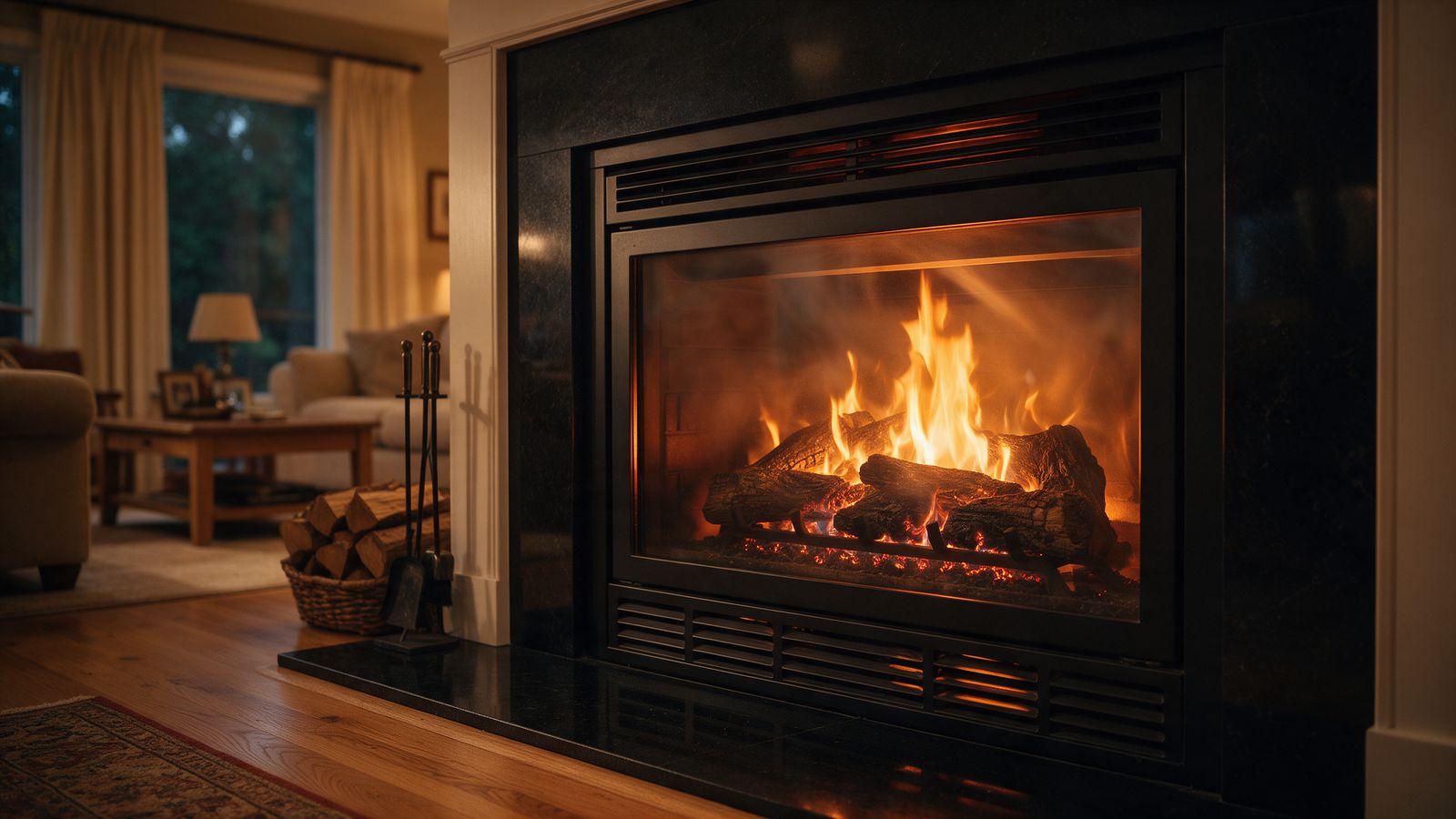
A fireplace blower moves room air around the appliance's hot exterior and sends warmed air back into the room. It can improve heat distribution, but it does not create extra fuel energy or repair an unsafe vent. A chimney exhaust fan is a different device with a different purpose. Identify which airflow problem you are trying to solve before buying either one.
For Colorado homeowners, a fan can be useful when heat collects near the fireplace while seating farther away stays cool. The right choice depends on the exact fireplace, approved accessories, electrical supply and room layout. A universal kit advertised by size is not automatically suitable for every unit it can physically fit behind.
Separate room air from combustion exhaust
Many gas and wood appliances transfer heat through radiation and convection. A blower assists room air movement around designated heat exchange surfaces. That air should remain separate from combustion products in a properly functioning appliance. Regency's technical explanation distinguishes this circulation from changing the appliance's rated fuel input.[1]
An exhaust fan acts on the chimney or venting path. It may be part of a specifically engineered system or a manufacturer approved solution to a defined problem. It is not interchangeable with a room blower, and its installation can involve controls, interlocks and electrical requirements.
If smoke is entering the room, stop treating the complaint as uneven heating. The chimney, appliance, fuel and house pressure need assessment. Adding an ordinary blower does not establish that combustion gases will leave safely. Diagnosis should come before accessory selection.
Identify the appliance and approved accessory
Find the model and serial information, then locate the installation and owner's manuals. Check whether a blower is supplied, optional or prohibited. The manual may specify a particular kit, mounting position, wiring arrangement and control method. Follow those details rather than substituting a visually similar fan.
An open masonry fireplace may not have a compartment designed for a blower. Some heat circulation accessories have their own installation limits. A factory built fireplace is a tested assembly, so drilling holes, altering panels or routing wires through unapproved spaces can affect its suitability.
For an insert, consider service access before the surround is finished. A fan motor or control may eventually need replacement. Permanent stonework that blocks the intended access panel can turn a straightforward service task into a disruptive repair.
“Choose a fan for the exact appliance and the airflow problem it is intended to solve.”
Compare the main types
| Device | Air it moves | Main purpose | Compatibility question |
|---|---|---|---|
| Appliance blower | Room air | Distribute available heat | Is this kit approved for the model |
| Freestanding room fan | Room air | Encourage circulation in the room | Can it operate safely at that location |
| Chimney exhaust fan | Combustion exhaust | Address a designed venting need | Is the complete system approved and controlled |
| Pellet appliance fan | Model specific airflow | Support intended appliance operation | Is the replacement part specified |
The distinction matters during troubleshooting. A weak room blower and inadequate chimney draft can feel related to the homeowner, but they require different observations and repairs. Describe the symptom before assuming which motor needs replacement.
Set realistic heating expectations
A blower can help deliver existing heat farther into the room. It does not increase the amount of fuel entering the burner or automatically change the appliance's tested output rating.[1] The practical result depends on the heat exchanger, fan speed and the paths available for air to circulate.
A room with open doorways may share heat differently from one divided by narrow passages. High ceilings, cold windows and furniture placement can also affect comfort. A fan is not a substitute for evaluating the building's heat loss or choosing an appliance appropriate to the space.
Compare noise at normal seating distance, not only beside a showroom display. High speed may move more air while becoming intrusive during conversation. Ask whether lower speed provides useful circulation and whether the controls allow the household to balance comfort and sound.
Understand delayed starting and stopping
Some blowers use a temperature switch and do not start immediately when the fire is lit. They may also continue after the flame is turned off while the appliance cools. That can be normal for the specific model. Check the operating instructions before assuming a delay means failure.
Other systems use manual switches, remote controls or variable speed settings. Batteries, control modes and electrical supply can affect operation. A fireplace that produces a flame does not prove that its fan has power, and an illuminated remote does not establish that every control command reached the unit.
Do not bypass a temperature switch or safety control to make the fan run continuously. If behavior differs from the manual, arrange service. The diagnosis should distinguish normal control logic from a failed motor, switch, wiring connection or blocked air path.
Check basic conditions without opening unsafe areas
When the appliance is cool and the manual permits it, confirm user accessible controls and the relevant household power supply. Keep intake and discharge openings free of stored objects, dust and furniture. Follow the manufacturer's cleaning instructions and avoid spraying cleaners into electrical parts.
Do not reach into moving equipment, probe energized wiring or remove sealed combustion components. Electrical troubleshooting and gas appliance service require appropriate qualifications. Grinding, burning smells, damaged cords or repeated breaker operation are reasons to stop and arrange assessment.
A blower that rattles may have accumulated debris, a mounting problem or a worn component. Replacing the motor without checking the installation can leave the noise unchanged. Tell the technician whether it occurs at one speed, after warmup or only when a panel is installed.
Plan electrical work as part of installation
An approved fan may require a designated outlet, junction box or wiring method. Route cables exactly as instructed so they avoid heat, sharp edges and moving parts. A nearby extension cord is not a universal permanent solution. The electrician and fireplace installer should coordinate access before finishes are closed.
Parker's adopted codes and permit guidance apply to relevant electrical and appliance work within its jurisdiction.[2] Confirm requirements for the actual property. Ask who handles approvals and whether the proposal includes power supply work or assumes it already exists.
During installation, retain the kit information and wiring diagram with the appliance manual. Model and part numbers make later service more efficient and reduce the temptation to buy an unsuitable replacement based only on dimensions.
Ask about operation during an outage
Some fireplaces can continue producing heat when household electricity fails, but their blowers may stop. Other appliances rely on powered controls or combustion components. Read the exact model instructions before planning around outage performance. A fanless operating mode must be permitted, not assumed.[3]
Pellet appliances deserve separate attention because powered feed and airflow components may be essential. Do not improvise a backup source or bypass controls. If emergency heat is an important goal, include approved outage operation in the appliance selection conversation rather than discovering the limitation during a storm.
When comparing a repair with a replacement kit, include the condition of the existing controls and wiring. A new motor may not correct a failed temperature switch, and a replacement kit may be unnecessary if an approved service part is available. Ask the technician to identify the fault and explain why the proposed scope is proportionate. Retain the removed part number and the installed replacement information on the invoice. That record makes the next service visit easier and prevents confusion between different fan versions sold for similar looking fireplace models.
Check controls before ordering replacement equipment.
Follow a sensible selection process and document compatibility
- Define whether the complaint is heat distribution, noise or venting.
- Identify the fireplace and find the approved accessory information.
- Check the room layout and realistic heating expectations.
- Confirm installation access, electrical needs and maintenance requirements.
- Compare normal speed noise and control behavior.
- Document the installed kit and demonstrate operation after completion.
Keep the fan in the regular service conversation. Clean airflow paths and sound connections support predictable operation. If a new fan changes symptoms unexpectedly, report what changed rather than compensating with unapproved settings.
Parker Homestead Chimney's fireplace repair and installation page is the appropriate starting point for discussing compatible blower options. Share the model number and describe where heat or noise is a problem. A useful recommendation should connect the accessory to that specific appliance and leave the household with clear operating and service instructions.
Sources and further reading
- Regency Fireplace Blowers Explained
- Town of Parker Building Codes
- Regency LRI3E Gas Insert Technical and Operating Information
Sources accessed October 15 2026. Product manuals and applicable local requirements control specific installations.