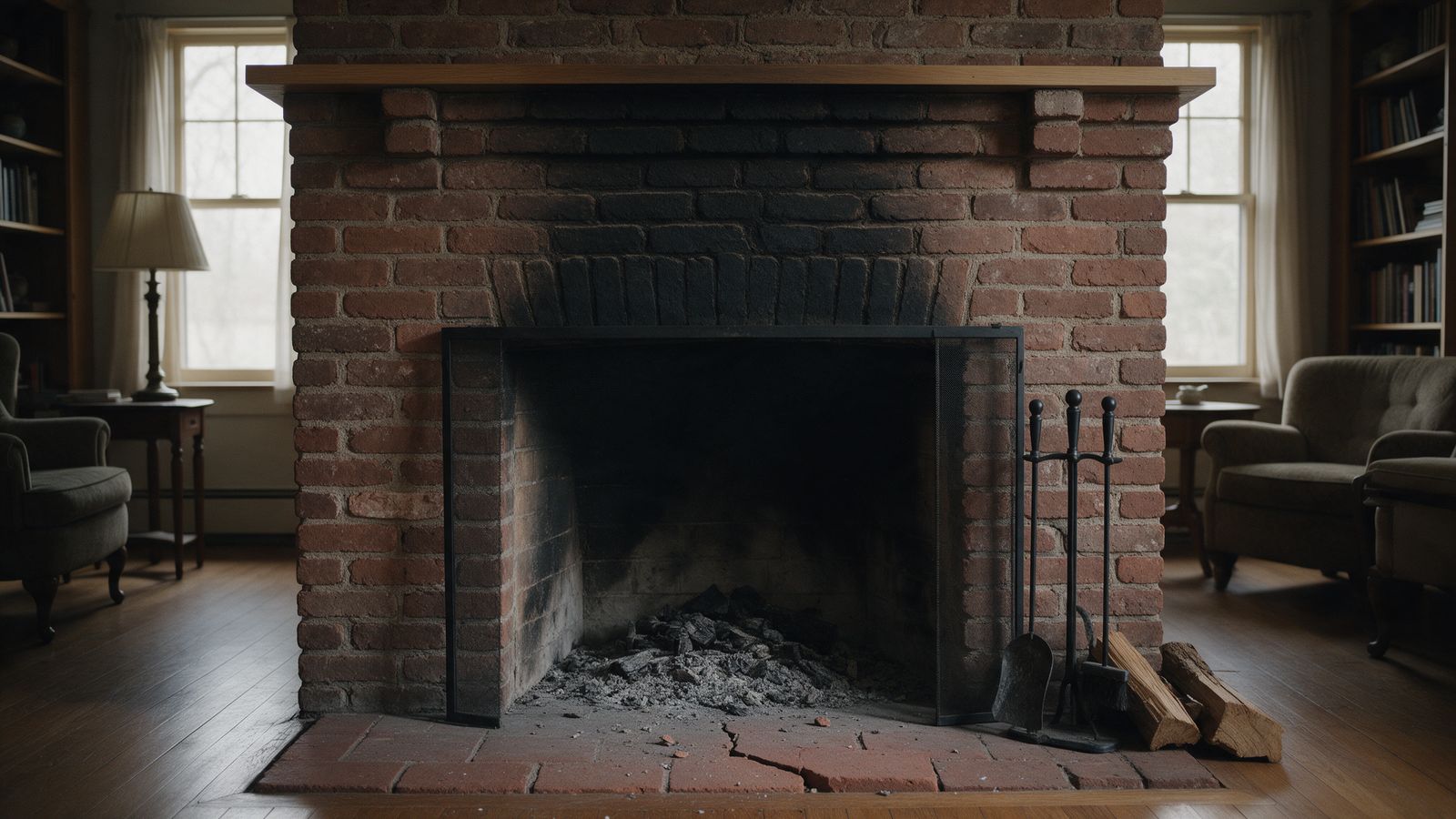
Smoke in the room, loose chimney material and unexpected animal sounds are reasons to arrange service before using the fireplace again. Other clues, such as staining or an odor after rain, may call for investigation without indicating an immediate emergency. The useful distinction is what action the observation requires, not whether every symptom can be called a chimney problem.
These ten signs help Colorado homeowners describe a concern accurately. They do not establish a diagnosis from a photograph or a checklist. If a carbon monoxide alarm activates, leave the building and contact emergency services. If a chimney fire is suspected, evacuate and call 911. Routine service scheduling comes after the emergency response.
1 Smoke enters the living space
Persistent smoke spill deserves attention even if opening a window appears to improve it. Possible causes include a blocked flue, cold chimney, pressure imbalance, unsuitable fireplace geometry or operating problems. A chimney sweep can remove deposits, but cleaning alone will not correct every draft complaint.[1]
Record when the smoke appears: startup, reloading, windy weather or operation of a kitchen exhaust fan. Do not keep repeating a smoky fire to collect more evidence. Stop using the fireplace and share the observations with the technician so the investigation can include the room and connected venting system.
2 A carbon monoxide alarm sounds
Carbon monoxide cannot be identified by smell or sight. An alarm is not a routine maintenance reminder. Leave the home, call for emergency help from outside and do not return until responders permit it. Symptoms such as headache or dizziness can require urgent medical attention.[2]
Several combustion appliances may share the building, so do not assume the fireplace is the only possible source. Provide responders with the known appliance information. After the immediate hazard is addressed, have the responsible equipment and venting evaluated before it returns to service.
3 Brick tile or mortar falls into the firebox
Pieces of clay or masonry can indicate deterioration somewhere above the visible opening. They may come from a flue tile, mortar joint or another component. Their source matters because the vent's ability to contain heat and combustion products may be affected.
Keep the fireplace unused and photograph the debris without reaching into the flue. Save representative pieces if the service provider requests them. Ask the inspector to identify the material and document its original location rather than treating debris removal as the complete repair.
4 The chimney top or exterior looks unstable
A leaning stack, displaced cap, loose crown fragment or separating brickwork requires prompt evaluation. Falling material can threaten people below, and structural movement may affect internal components as well. Keep people away from the area beneath visibly loose material.
Stay on the ground. Do not push on loose brick or use a ladder to test whether a cap is secure. An inspection should assess the support, extent of damage and need for structural expertise. Cosmetic mortar smears are not a substitute for understanding movement.
5 Water appears near the fireplace
Drips, damp masonry and ceiling stains can come from the cap, crown, flashing, chase cover or nearby roof. Condensation is another possibility. The repair should follow the water route rather than assume that every stain needs the same waterproofing product.[3]
Note the weather and whether the appliance was operating. Move belongings away from active moisture. Stop using equipment if water reaches electrical controls or causes another hazard. Preserve photographs before painting, cleaning or covering the affected surface.
6 Chirping scratching or movement comes from the flue
Animals or nests can obstruct the chimney. Do not light a fire to drive wildlife out, and do not close the top until the chimney is confirmed clear. Dependent young or an active nest can change the removal method and timing.
Colorado Parks and Wildlife recommends preventing chimney entry, while federal rules can protect active migratory bird nests.[4][5] Arrange species identification and lawful removal. If a bat enters occupied space or contact may have occurred, seek animal control or public health advice rather than handling it yourself.
7 The chimney develops a persistent unusual odor
A smoky odor during humid weather may involve deposits and reverse airflow. A decay odor may suggest wildlife or organic material. Musty conditions may involve moisture. These clues help direct an inspection, but they cannot identify every source without examining the system.
A suspected gas odor is a separate emergency concern. Leave the area and contact emergency services or the gas utility from outside according to local guidance. Do not operate switches or investigate the appliance. For a nonemergency recurring smell, record the timing and associated weather.
8 Operation changes without an obvious explanation
A fireplace that suddenly drafts poorly, an insert that repeatedly shuts down or a gas unit that develops soot needs investigation. Changes can involve fuel, controls, vent obstruction, air supply or damaged components. Repeatedly resetting an appliance can conceal the pattern without correcting the cause.
Locate the model number and note any error code shown by the controls. Do not bypass safety devices or substitute parts based only on appearance. Manufacturer instructions and the actual system configuration should guide diagnosis and repair.
9 The termination is damaged or blocked
A cap can become displaced, a screen can collect debris and a metal termination can be damaged by weather or work nearby. Exhaust still needs its intended route. A protective accessory that blocks discharge creates a new problem rather than solving one.
From a safe location, note obvious changes after storms or roof work. Ask for photographs when the top is inspected. On a factory built chimney, replacement parts must suit the listed system; a generic cap may not be an approved equivalent.
10 There is no reliable inspection history
Unknown history is itself a reason to arrange an appropriate inspection before regular use. A clean firebox does not reveal the full condition of the flue, accessible clearances or prior alterations. A recent home purchase, appliance change or suspected event can require a broader scope than routine maintenance.[1]
CSIA summarizes the annual inspection baseline with cleaning and repairs when needed. The technician should explain the inspection level, findings and limitations in writing. Keep the report with the appliance manuals so the next decision starts with a record rather than another guess.
“Describe the symptom and its timing clearly so the inspection can answer the right question.”
Sort observations by the next action
| Situation | First action | What follows |
|---|---|---|
| Active fire or CO alarm | Leave and contact emergency services | Evaluation before reuse |
| Loose material or obstruction | Stop use and keep people clear | Prompt professional inspection |
| Recurring water or odor | Document timing and conditions | Targeted diagnosis |
| Unknown maintenance history | Book inspection before regular use | Written service plan |
Urgency depends on the actual hazard. A familiar symptom is not automatically harmless because it happened last year, and a visible cosmetic defect is not automatically a structural emergency.
Prepare a useful service request in advance
- Identify the appliance and fuel if known.
- Describe what changed and when it first happened.
- Note weather, recent roof work or appliance alterations.
- Share safe photographs and prior inspection reports.
- Explain whether the fireplace remains in use.
- Ask what conditions require it to remain off until inspection.
This information helps the service provider prepare appropriate tools and allocate time. It also makes the written report easier to compare with the original complaint. Keep observations factual: smoke entered during startup is more useful than the chimney is broken.
Keep a simple symptom log until the visit. Record dates, conditions and whether the appliance was used afterward. If the situation changes, update the service provider rather than waiting silently for the appointment. A new alarm, loose component or active leak can change the urgency and the equipment needed for the assessment.
Share the log when booking service.
Give the dryer vent its own attention
Long drying times, an unusually hot laundry area or a burning odor can indicate dryer exhaust or appliance trouble. Those symptoms need a separate assessment; a fireplace inspection does not clear the dryer duct. Clean the lint filter as directed and follow the appliance's vent maintenance instructions.[6]
For nonemergency chimney concerns, contact Parker Homestead Chimney through the inspection page with the observations above. Ask for findings ranked by urgency and a clear explanation of what needs cleaning, repair or further investigation. A useful service visit converts symptoms into a documented next step that the homeowner can understand.
Sources and further reading
- Chimney Safety Institute of America Homeowner Resources
- US Consumer Product Safety Commission Carbon Monoxide Fact Sheet
- CSIA Water and Your Masonry Chimney
- Colorado Parks and Wildlife Protect Your Home From Wildlife
- US Fish and Wildlife Service Bird Nests
- US Consumer Product Safety Commission Overheated Clothes Dryers Can Cause Fires
Sources accessed October 15 2026. Product manuals and applicable local requirements control specific installations.