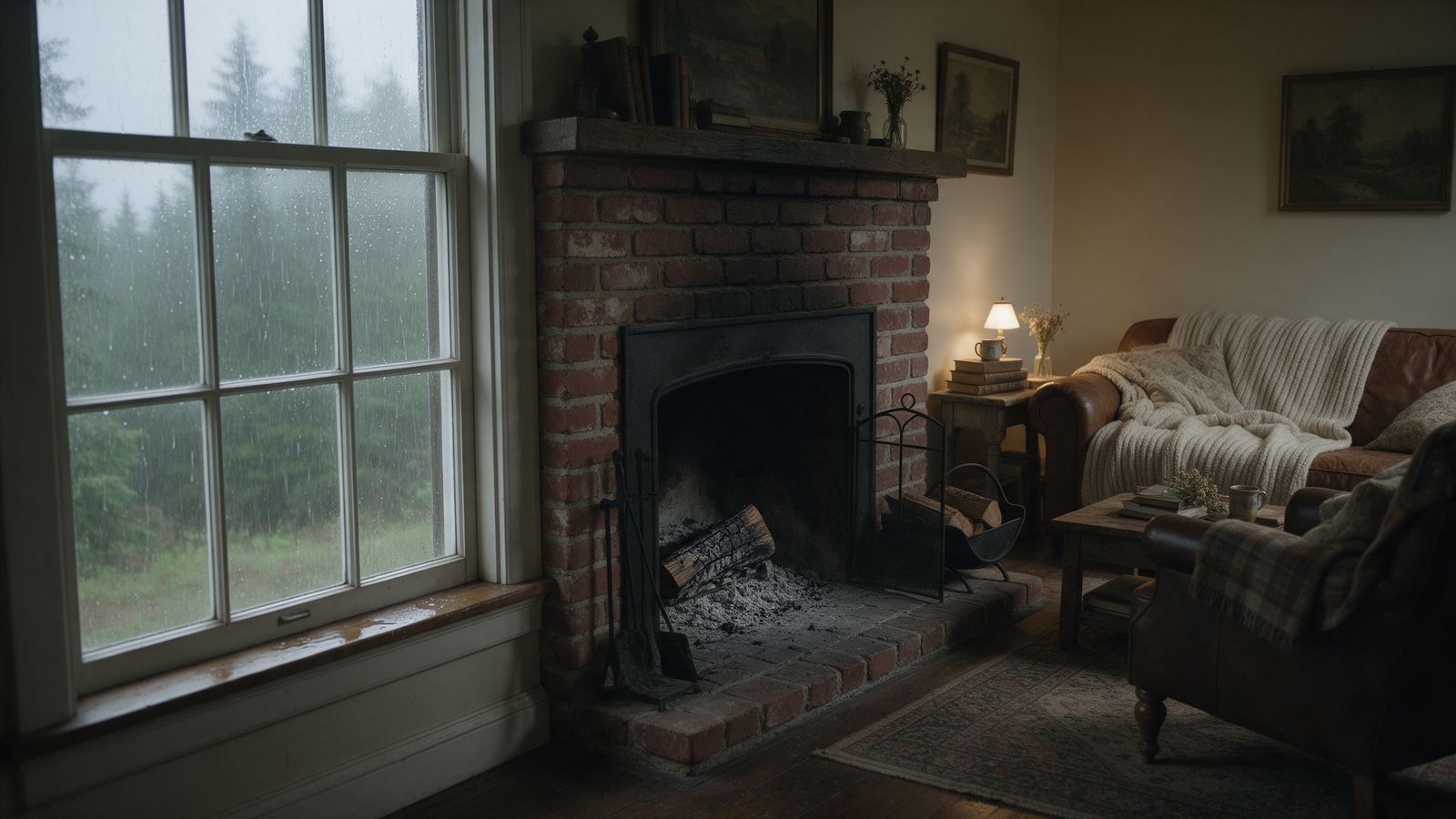
A chimney odor can come from deposits, moisture, reverse airflow, wildlife or an appliance problem. The smell's timing often provides a better clue than its strength. A smoky odor after rain suggests a different investigation from a decay odor with animal sounds. No smell can reliably establish that carbon monoxide is absent, because carbon monoxide itself has no odor.[1]
Start by separating emergencies from recurring nuisance odors. If you suspect a gas leak, leave the area and contact emergency services or the gas utility from outside according to local guidance. If a carbon monoxide alarm sounds, leave the home and seek emergency help. Do not investigate those conditions by sniffing around the appliance or operating switches.
Record when the recurring odor appears
For a nonemergency odor, note weather, humidity, wind and whether the fireplace is operating. Record recent cleaning, roof work, fuel changes or animal activity. A description such as smoky smell on humid afternoons when the dryer runs gives an inspector useful context. The chimney smells bad is harder to investigate.
Photograph visible stains or debris from a safe position, but do not reach into the flue or remove unknown nesting material. Keep prior inspection reports and repair invoices available. A recurring odor after a recent service may involve an unresolved cause rather than proof that the cleaning was poorly performed.
Avoid spraying fragrance or deodorizer before the visit if it obscures the original complaint. Masking the smell does not remove deposits, correct pressure conditions or identify a leak. The assessment should preserve enough information to determine what is happening.
Understand smoky odors from an unused fireplace
Wood burning leaves soot and other deposits in the chimney. Odors associated with those materials can become more noticeable under some moisture and airflow conditions. CSIA homeowner guidance discusses chimney smells and the role of downward air movement.[2] Cleaning can reduce the source, but it may not correct the airflow bringing odor indoors.
The home's pressure matters. Exhaust fans, a clothes dryer and other equipment can affect indoor pressure relative to the chimney. Air may then move down a cold flue instead of out. A persistent pattern deserves a whole system assessment rather than repeated deodorizing.
Do not permanently block the fireplace opening or add a closing top damper without checking fuel compatibility. Gas logs and other connected appliances can require an open exhaust route. Any airflow remedy should preserve the installation requirements of the actual system.
“Identify the odor source and the route carrying it indoors before choosing a treatment.”
Consider moisture when smells follow rain
Water can enter through the cap, crown, flashing, masonry or chase cover. Moisture can interact with deposits or damp building materials and make an odor more apparent. The leak investigation should follow the entry route rather than assume the firebox itself is the source.[3]
Look for corresponding stains, rust or damp debris without dismantling the appliance. Record whether the odor follows wind driven rain, snowmelt or appliance operation. Condensation can also produce moisture, especially when the vent is unsuitable for the connected appliance.
Correcting water entry may be necessary even after cleaning. A surface coating cannot rebuild failed joints or replace defective flashing. Ask the contractor to distinguish deposit removal, leak repair and any work needed on damp surrounding materials.
Treat decay odors as an investigation
Nesting material, animal waste or a carcass can create strong odors. Scratching, chirping and falling twigs may accompany the smell, but quiet does not prove that the chimney is empty. Do not light a fire to remove the odor or force animals out.
Species identification and nest status matter. Colorado Parks and Wildlife offers prevention guidance, and federal protections can apply to active migratory bird nests.[4][5] Removal, cleanup and exclusion should be planned in that order, with a suitable cap installed only after the chimney is clear.
If a bat entered occupied space or contact may have occurred, seek animal control or public health advice promptly.[6] An odor appointment is not a substitute for exposure assessment. Avoid handling wildlife or releasing a bat before appropriate professionals advise whether capture or testing is relevant.
Use the pattern to guide the assessment
| Odor pattern | Possible contributors | Useful investigation |
|---|---|---|
| Smoky while fireplace is idle | Deposits and downward airflow | Cleaning history and house pressure |
| Musty after precipitation | Water entry or damp materials | Cap, crown, flashing and moisture route |
| Decay with animal clues | Wildlife or retained organic material | Species, occupancy and cleanup scope |
| New odor during operation | Appliance or venting problem | Stop use and evaluate the system |
| Suspected gas odor | Possible fuel leak | Leave and contact emergency assistance |
These are possibilities, not diagnoses. More than one condition can occur at once. For example, a damaged cap can admit both water and animals, while house pressure carries the resulting odor into the room.
Know what cleaning can and cannot accomplish
Sweeping removes suitable deposits and accessible debris. The report should describe the areas reached, material removed and any remaining condition. If hard deposits need a different method, ask for that explanation before assuming a standard brushing will remove everything.[2]
Cleaning does not repair a damaged liner or make an incompatible gas installation suitable. It also cannot remove moisture hidden behind finishes or guarantee that a pressure imbalance will disappear. A useful service plan states which part of the complaint cleaning is expected to address.
Ask whether inspection is included and what happens if the flue cannot be fully evaluated. The homeowner should receive findings and limitations in writing. A fresh scent or a clean firebox is not proof that every relevant surface has been inspected.
Evaluate draft remedies carefully
A compatible top sealing damper can reduce airflow through some unused wood fireplace flues. It is not appropriate for every fuel or appliance. Manufacturer restrictions must be checked before installation, especially when gas logs, inserts or other equipment are present.[7]
Broader pressure problems may require building or HVAC expertise. New windows, air sealing or a powerful kitchen hood can change conditions in the house. Describe those changes to the inspector. Opening a window may provide an observation during professional diagnosis, but it should not become an assumed permanent correction for an unsafe system.
If smoke spills during burning, stop use until the cause is evaluated. A room blower moves room air and does not automatically improve chimney draft. A chimney exhaust fan is a separate engineered decision with its own compatibility and control requirements.
Avoid products that conceal the problem
Fragrances, candles and odor absorbers may change what the room smells like without removing the source. Chemical chimney products also have limited purposes and must suit the appliance. They do not replace mechanical cleaning, inspection or moisture repair.
Do not mix household chemicals or spray them into an unknown vent. Avoid placing improvised plugs in an active flue. Any temporary closure for an unused fireplace needs a clear removal routine and must never obstruct an appliance that requires venting.
For contaminated material, ask about appropriate protective cleanup and disposal. A household vacuum may spread fine debris or expose the operator to unknown material. The cleaning method should follow the actual source and amount of contamination rather than a generic odor treatment package.
If several fireplaces share the building, record which room first develops the odor. Different flues can have different deposits and pressure conditions. That location helps the inspector avoid treating an entire chimney stack as a single undifferentiated source.
Record improvements as carefully as recurrences.
Prepare for a focused visit
- Identify whether the smell is an emergency concern.
- Stop appliance use when operation, obstruction or damage is uncertain.
- Record timing, weather and equipment running nearby.
- Gather prior reports and safe photographs of stains or debris.
- Ask the provider to separate source removal from airflow correction.
- Verify whether follow up is needed under comparable conditions.
Keep notes after the repair. If the smell returns, compare the conditions rather than immediately repeating the same treatment. A pattern limited to wet weather may reveal a remaining moisture route, while one linked to an exhaust fan may point back to pressure.
Parker Homestead Chimney's animal removal, sweeping and inspection pages provide the relevant starting points for a recurring chimney odor. Describe what the smell resembles and when it occurs, while clearly reporting any animal contact or alarm event. A useful assessment should leave the household with a documented cause or a defined next investigation, not simply a stronger fragrance.
Sources and further reading
- US Consumer Product Safety Commission Carbon Monoxide Fact Sheet
- Chimney Safety Institute of America Homeowner Resources
- CSIA Water and Your Masonry Chimney
- Colorado Parks and Wildlife Protect Your Home From Wildlife
- US Fish and Wildlife Service Bird Nests
- US Centers for Disease Control and Prevention Preventing Rabies From Bats
- U S Fireplace Products Energy Top Application and Installation Requirements
Sources accessed October 15 2026. Product manuals and applicable local requirements control specific installations.