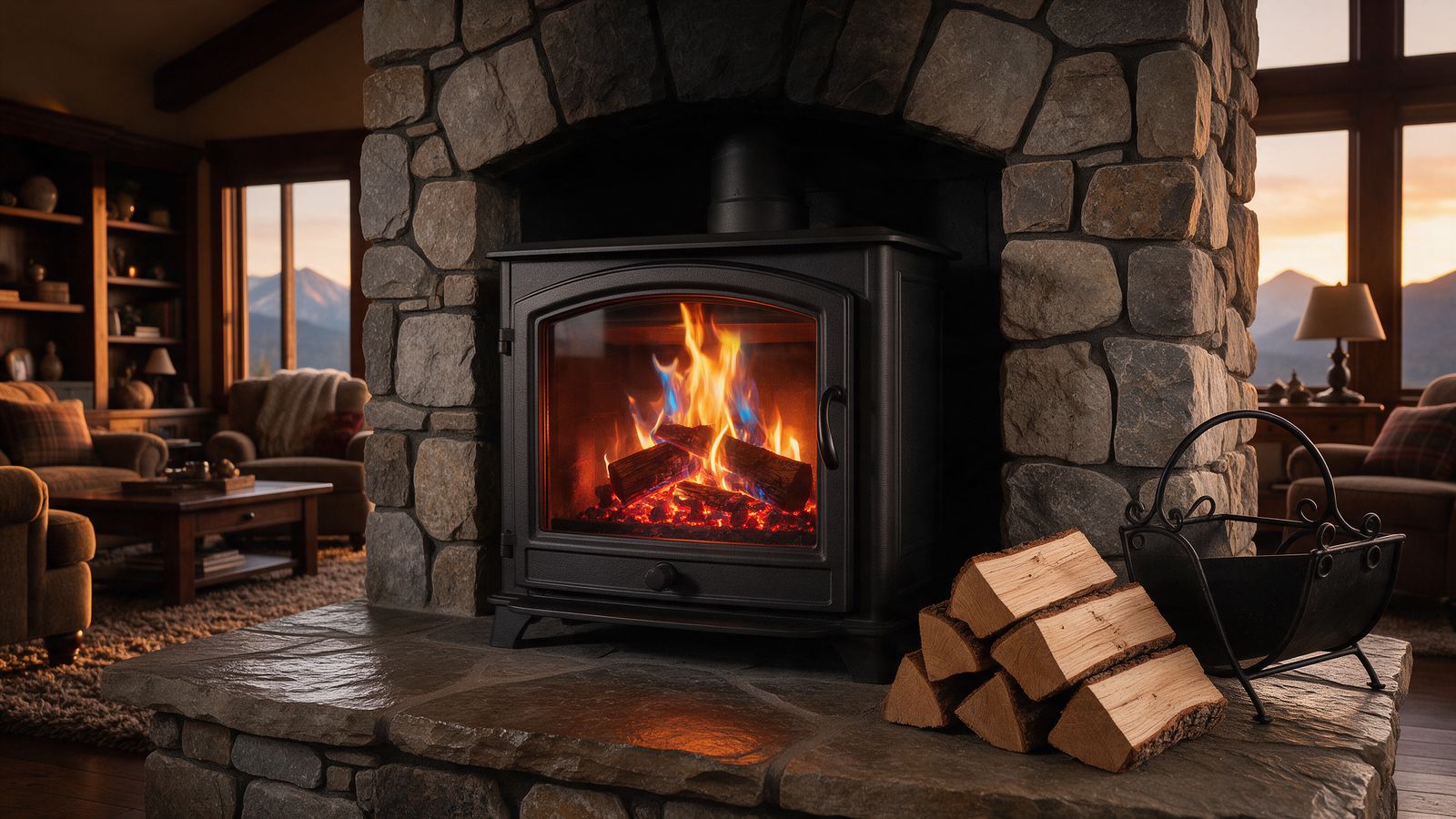
A wood burning insert is a listed appliance installed into a suitable existing fireplace and connected to an approved venting arrangement. It can change how a room receives heat compared with an open fireplace, but it requires more planning than matching the width of the opening. The host fireplace, chimney, liner, hearth and clearances must all suit the chosen model.
For a Colorado homeowner, begin with the heating goal and existing construction. Decide whether the aim is occasional supplemental heat or frequent wood heating, then evaluate the home's venting and fuel storage. A showroom flame and a broad heating area claim do not establish how the appliance will perform in a particular room.
Confirm that the existing fireplace can accept an insert
Masonry and factory built fireplaces require different evaluation. An insert approved for a masonry fireplace is not automatically permitted inside every metal fireplace. Check both the insert instructions and the host system's requirements before committing to equipment.[1]
Measure more than the front opening. Rear width, depth, height, hearth projection and surrounding clearances can limit the choice. The chimney route and available liner space matter as well. A unit that slides into the cavity may still be unsuitable when connected and installed as required.
Have the existing chimney inspected before covering it with a surround. Damage, deposits or unsuitable clearances can change the project scope. A new insert does not repair an unstable chimney or make an unresolved liner defect irrelevant. The proposal should explain how existing findings will be addressed.
Choose output for the room and the routine
Oversizing can make a room uncomfortable and encourage the owner to restrict air excessively. Undersizing can lead to disappointment or attempts to overfire. Ask how the recommended model matches the intended space, building conditions and expected hours of use.
Maximum output is only one characteristic. Review usable operating range, fuel loading, access, ash handling and the manufacturer's operating instructions. Catalytic, noncatalytic and hybrid designs can have different maintenance and control routines. Choose a system the regular users are willing to learn and maintain.
Regency's insert information illustrates how models differ in size, blower arrangements and combustion design.[1] Those examples are not approval for a particular home. The final selection should rely on the exact model documentation and site assessment rather than a general product category.
“Select the insert and liner as one installation, using the existing fireplace and heating goal as the starting point.”
Treat the liner as part of the appliance project
An insert needs the venting arrangement specified by its listing and instructions. A dedicated liner may be required, with dimensions, material and insulation suited to the appliance and chimney. Do not assume the old open fireplace flue can simply receive exhaust from a short connector.
Ask for the sizing basis and the full route from the appliance collar to the termination. Offsets, chimney height and available space can affect installation. If existing tile removal or other preparation is needed, identify that before equipment arrives and the fireplace is dismantled.
UL 1777 addresses listed chimney lining systems within its defined scope.[2] A material label alone does not describe a complete approved installation. Request the liner product, insulation arrangement, connections, support and top termination details in the written proposal.
Compare insert features that affect ownership
| Feature | Why it matters | Question to ask |
|---|---|---|
| Firebox and loading access | Shapes fuel handling and tending | What log sizes and loads are permitted |
| Combustion system | Changes operation and maintenance | Which routine checks does the manual require |
| Blower | Distributes available room heat | How noisy is normal operation |
| Ash handling | Affects daily cleanup | How are ashes removed safely |
| Service access | Affects future repair effort | Can components be reached after finishing |
| Vent configuration | Controls installation suitability | What liner and termination are required |
Avoid comparing only one advertised efficiency figure. Confirm the test basis and distinguish input, output and other ratings. A contractor should explain the relevant measurements without turning a broad marketing number into a guaranteed heating result.
Check Colorado rules and local approval
EPA certification, building approval and permission to operate during air quality restrictions are separate questions. Confirm the chosen model's certification where applicable and check current state and local requirements for the actual address.[3] Do not assume that a product advertised for sale is approved for every location or operating condition.
Parker publishes its adopted building codes and permit information.[4] Verify jurisdiction because a Parker mailing address may fall outside town boundaries. Ask who obtains permits, schedules inspections and supplies the final approval record. Coordinate any electrical work for a blower before finishing the surround.
Altitude also belongs in the installation discussion. The chimney and appliance must operate under the site's conditions, and the manual may contain relevant guidance. There is no universal Colorado adjustment that replaces proper sizing and commissioning.
Plan hearth protection and the finished opening
The required hearth extension and floor protection depend on the appliance and existing fireplace. A thin decorative tile layer does not automatically provide the required protection. Confirm the underlying assembly and clearances rather than judging only the visible finish.
Mantels, trim and nearby furniture need attention too. Adding noncombustible facing does not make hidden wood framing immune to heat. The finished dimensions should be checked against the exact model instructions, including projections and any approved shielding arrangements.
Preserve ventilation and service access. A surround panel may be intended to be removable, and air openings should not be grouted closed for appearance. Discuss future fan, catalyst or other component service before permanent finishes make access difficult.
Prepare for the fuel commitment
Wood heating requires a reliable supply of approved dry fuel. EPA guidance recommends moisture testing on suitable fresh split surfaces and warns against burning treated wood or waste.[5] A new insert cannot make wet fuel perform like properly dried wood.
Plan outdoor storage with ventilation, weather protection and appropriate separation from the home. Bring only a manageable amount inside and keep it outside required clearances. If the household cannot maintain the fuel routine, compare other appliance choices before making the installation commitment.
Learn the startup, reloading and air control procedure for the model. Do not carry habits from an old stove into a different combustion design without checking the instructions. Persistent smoke or rapidly changing deposits requires investigation rather than repeated improvisation.
Use an installation sequence that preserves checks
- Inspect and identify the existing fireplace and chimney.
- Define the heating goal and shortlist suitable models.
- Confirm dimensions, hearth requirements, liner route and clearances.
- Resolve permits, existing defects and electrical needs.
- Install and inspect concealed work before closing finishes.
- Demonstrate operation and provide manuals and approval records.
- Set the first maintenance review based on use and instructions.
Commissioning should include the relevant operational checks and an explanation of normal behavior. The homeowner should know which observations require a service call, such as smoke spill, unusual noises or repeated operating problems. Do not treat delivery of the manual as equivalent to a practical handoff.
Compare service support as well as the appliance features. Ask how replacement parts are identified, who can maintain the selected combustion system and what records the owner should keep. A model with an attractive face still needs practical access to qualified service. Review the manual's recurring tasks before purchase and decide which are appropriate for the owner and which require a technician. Include those obligations in the ownership budget instead of treating them as unexpected extras. Clear expectations make it easier to recognize a developing problem and arrange attention before the household depends on the insert during cold weather.
Confirm these responsibilities before selecting the model.
Keep maintenance in the ownership budget
CSIA summarizes annual chimney inspection guidance with cleaning and repairs when needed.[6] Frequent use or a new operating pattern may justify earlier checks. Ask for the initial follow up recommendation and record why that timing was selected.
Blowers and controls also need the attention specified by the manufacturer. Outage operation varies by model; some appliances can continue heating without a blower, while powered components may have other requirements. Verify permitted operation before relying on the insert as backup heat.
Parker Homestead Chimney's fireplace installation and lining pages provide the appropriate starting points for an insert discussion. Bring photographs, the existing appliance information and a realistic description of intended use. A complete proposal should connect the selected insert, venting, hearth and service plan so the household understands the full installation before approving it.
Sources and further reading
- Regency Wood Fireplace Inserts
- UL Standards and Engagement UL 1777 Standard for Chimney Liners
- US EPA Frequent Questions About Wood Burning Appliances
- Town of Parker Building Codes
- US EPA Burn Wise Facts Figures and Health and Safety Tips
- Chimney Safety Institute of America Homeowner Resources
EPA Burn Wise pages are retained as historical technical guidance. Verify current regulations and incentive terms with the responsible authority.
Sources accessed October 15 2026. Product manuals and applicable local requirements control specific installations.